
Oak Wilt Treatment in the St. Croix River Valley: What Every Homeowner With Oaks Needs to Know
If you have oaks on your property in Hudson, Stillwater, or anywhere along the St. Croix River bluff communities, oak wilt is not a distant concern but an active threat in your county right now. The disease kills red oaks within weeks of infection during the growing season, spreads underground without any visible wound, and can move from one tree to every connected oak on your property before you know what you’re dealing with.
Oak tree wilt treatment is not a DIY option. The fungicide that actually works, propiconazole, requires pressurized trunk injection by a certified arborist. The root graft disruption that stops underground spread requires specialized trenching equipment. And the decision about whether a given tree is worth treating or past the point of no return requires a trained eye that has seen this disease at every stage.
This guide explains what oak wilt is doing in the St. Croix River Valley specifically, how to identify it, what oak wilt treatment actually involves, and why the April to September pruning restriction is the most important thing you can do to protect your oaks right now.
Why the St. Croix River Valley Is One of the Highest-Risk Oak Wilt Regions in the Upper Midwest
The St. Croix River Valley sits directly within the oak wilt belt running from Minnesota through central Wisconsin. This is not an abstract geographic footnote, county extension offices in St. Croix County, WI and Washington County, MN have documented confirmed oak wilt cases across the bluff communities along the river corridor. Hudson, Afton, Stillwater, Bayport, and New Richmond are all within established infection zones.
Red oaks are the most susceptible species and among the most common native trees in the ridge-top neighborhoods above the St. Croix. A single infected red oak in a stand can kill every connected tree through root grafts within one growing season, not one or two trees, but potentially the entire oak canopy on a wooded residential lot.
White oaks are more resistant but are not immune. Homeowners in Lake Elmo, River Falls, and New Richmond with mature white oak specimens should remain aware of transmission risks, particularly near confirmed infection sites. White oaks decline more slowly, which can lead homeowners to misdiagnose the problem for a season or two before the cause becomes clear.
Oak wilt spreads through two distinct pathways. Above ground, sap beetles carry fungal spores from infected trees to fresh wounds on healthy oaks via pruning cuts, storm damage, and construction wounds during late spring and early summer when beetle activity peaks. Below ground, root grafts between oaks of the same species allow the Ceratocystis fagacearum fungus to move through interconnected root systems without any wound or insect required.
The St. Croix River Valley’s dense, continuous oak canopy in neighborhoods like Hudson’s south bluff and the Afton ridge communities creates exactly the conditions where root graft transmission thrives. Trees planted in clusters or in natural woodland settings, the defining character of these neighborhoods, are at the highest risk because root grafts develop naturally when oaks grow within 50 feet of one another.
How to Identify Oak Wilt on Your Trees
Catching oak wilt symptoms early is the difference between a tree that can be managed and a tree that is already beyond saving. The presentation differs significantly between red oaks and white oaks, and both differ from the other diseases and stresses that homeowners in Hudson and River Falls routinely mistake for oak wilt.
Red Oak Symptoms
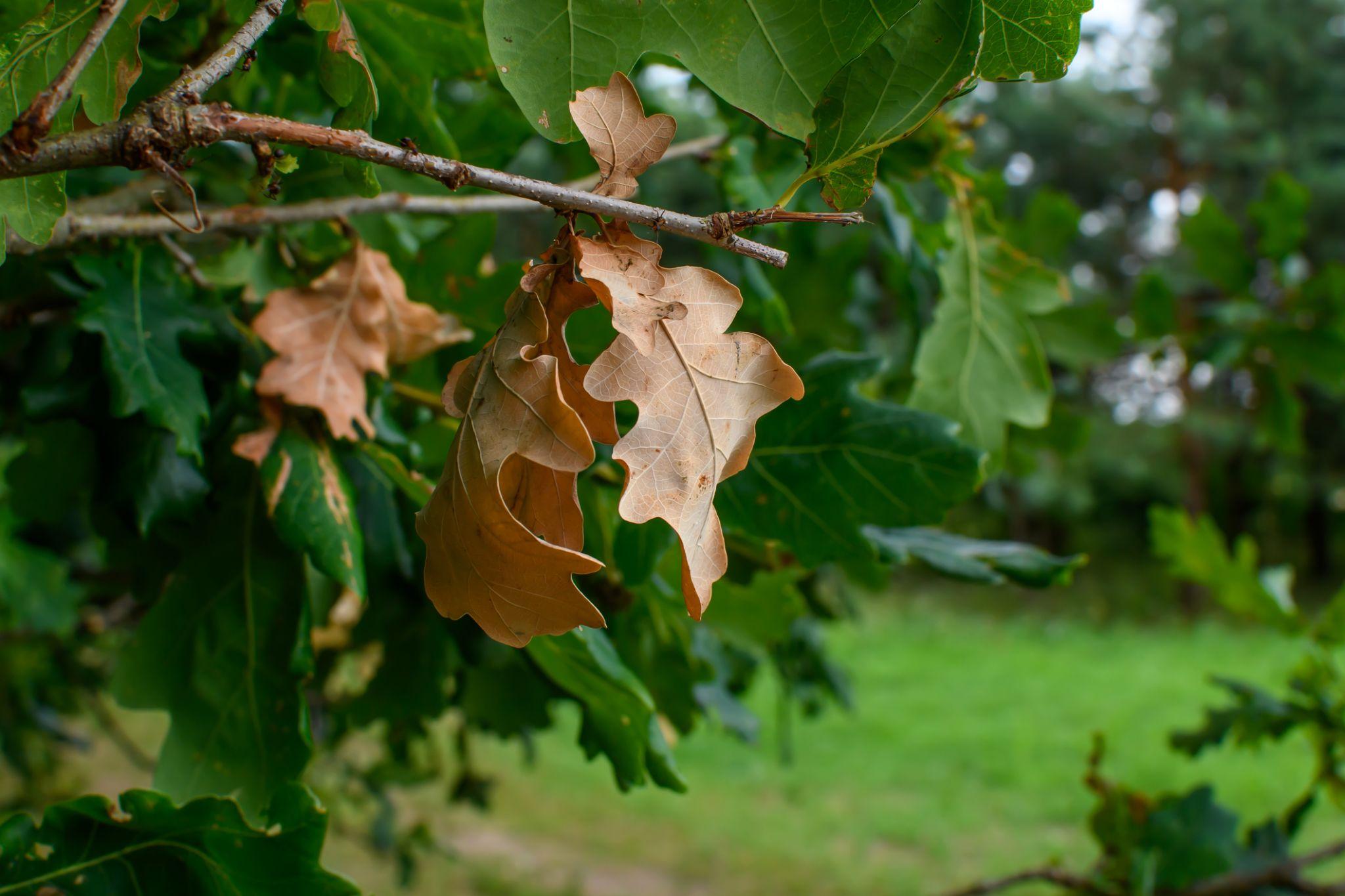
These symptoms progress rapidly. Starting in late May through midsummer, leaves in the upper crown begin wilting and browning from the margins inward. Within weeks, the browning moves down through the entire crown. The critical diagnostic detail: affected leaves wilt, turn brown, and drop while still attached to the branch, they do not simply fall cleanly as in autumn. This speed and the leaf retention pattern are what distinguish oak wilt from drought stress, which progresses more gradually and does not cause leaves to drop while still green.
In late summer and fall, infected red oaks sometimes develop fungal mats beneath the bark, pressure pads that crack the outer bark and emit a fruity odor. This is how sap beetles locate the tree. If you notice bark cracking with an unusual sweet smell on a tree that has already declined, this is the spore source that will infect your other oaks next spring if not handled correctly.
White Oak Symptoms
These symptoms are slower and easier to miss. Sporadic branch dieback occurs over multiple seasons, leaf margins scorch gradually, and crown thinning develops over a year or two. Homeowners in Stillwater and Afton with white oaks frequently attribute this to winter damage or nutrient issues for a season before the pattern becomes recognizable.
Oak wilt is also frequently confused with anthracnose, a fungal disease that affects lower leaves and appears in cool, wet spring weather, and with drought stress or gypsy moth defoliation. The UW-Madison Extension oak wilt identification guide is a useful starting point, and documenting symptoms with photos before calling an arborist helps the diagnosis go faster. A certified arborist assessment is the only reliable way to confirm oak wilt and to determine whether oak wilt treatment is still viable for your specific trees before the disease progresses further.
For professional diagnosis, visit our certified arborist services page to schedule an on-site assessment.
Oak Wilt Treatment Options: What Works and What Doesn’t
Understanding what treatment for oak wilt actually accomplishes, and what it cannot do, is essential before any decision is made about your trees.
Propiconazole Trunk Injection
The primary oak wilt treatment tool for living trees is propiconazole, a systemic fungicide delivered directly into the tree’s vascular system through a pressurized trunk injection system. This is the approach Willow River Company’s certified arborists use, and it is the most well-documented intervention available for this disease.
Fungicide injection for oak wilt works as a management tool, not a cure. In white oaks, early-stage propiconazole injection can suppress the disease and support recovery. In red oaks, it is most effective when applied preventively, before any symptoms appear, or in the very early stages of infection. A red oak showing more than 30% crown dieback has very limited treatment potential. At that point, the goal shifts from saving the tree to preventing spread to neighboring oaks.
Timing is everything. Propiconazole injections are significantly more effective in early spring before active beetle flight, or in fall after beetle activity subsides. An injection into a red oak with 40% crown collapse is unlikely to reverse the decline. This is not a treatment you want to delay. For the full overview of every tree treatment Willow River Company provides across the St. Croix River Valley, see our tree service guide.
Post-treatment, deep root fertilization can support recovery in trees that retain enough vascular function to benefit from improved nutrient uptake.
Root Graft Disruption
Where confirmed infection exists, severing the root grafts between the infected tree and adjacent healthy oaks is standard protective practice across St. Croix County and Washington County. A trench cut to four feet deep along the drip line between the infected and healthy oaks breaks the underground connection the fungus uses to travel. In densely wooded lots on the Hudson bluffs or in Afton’s ridge neighborhoods, this is frequently the most important intervention available.
What Does Not Work
Surface fungicide sprays, DIY soil drenches, and removing infected branches without removing the entire tree do not stop oak wilt. The fungus lives in the vascular system (not on leaf surfaces) and branch removal simply creates fresh wounds that attract the sap beetles carrying more spores. Homeowners seeking these DIY approaches need clear guidance: they will not work, and attempting them wastes time that could be spent on interventions which do.
Tree Removal
A red oak with advanced oak wilt infection must be removed. The wood must be handled correctly, it cannot be transported out of quarantine areas during the active season and must be chipped, buried, or debarked to destroy the fungal mats. The Wisconsin Department of Agriculture, Trade and Consumer Protection publishes guidelines on oak wilt wood handling that apply to any removal in St. Croix County.
The Critical Pruning Restriction for Oaks in Wisconsin
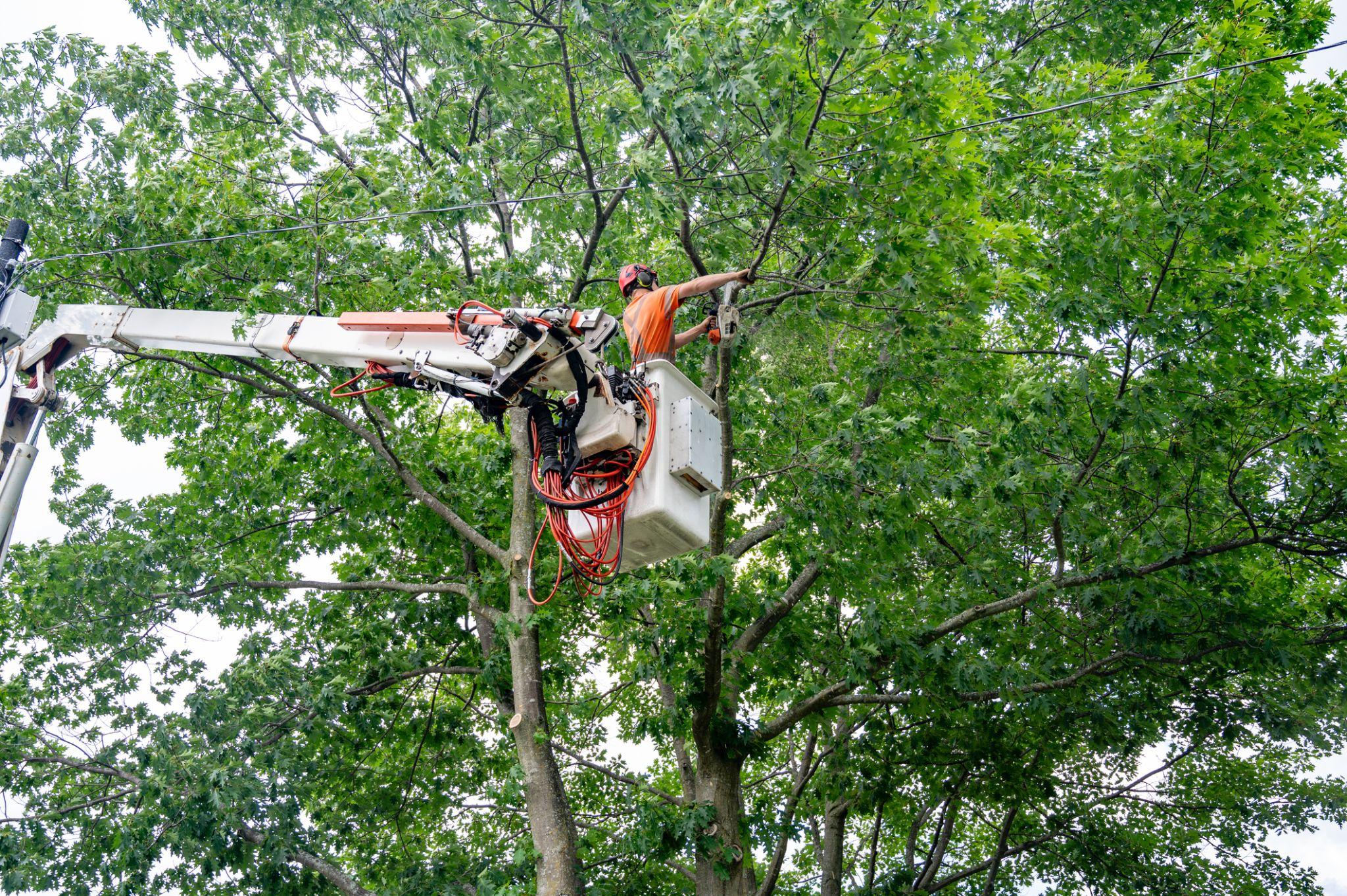
Oak wilt prevention starts with one rule that every homeowner in the St. Croix River Valley needs to know and follow: do not prune oak trees between April to September.
The Wisconsin DNR and UW-Madison Extension both recommend against pruning oaks during this window because it corresponds to peak sap beetle activity. When a fresh pruning cut is made on a healthy oak during this period, the wound releases volatile compounds that attract sap beetles, the same beetles that carry oak wilt fungal spores from infected trees. An oak pruned on May 10 is meaningfully more vulnerable than the same tree pruned on March 20.
This is not an abstract guideline. It is the single most actionable step any homeowner or contractor in Hudson, Stillwater, River Falls, or New Richmond can take to reduce oak wilt risk on their property. If a tree service offers to prune your oaks in May or June, that is a significant red flag. Any reputable certified arborist serving the St. Croix River Valley will schedule oak pruning outside this window unless there is a genuine emergency like storm damage, a hazard limb threatening a structure, that cannot wait.
The MN DNR recommends the same restricted pruning window for Minnesota properties. Homeowners in Stillwater, Afton, Bayport, and Lake Elmo face the same biological reality even if the formal advisory comes from a different state agency. The beetles do not follow state lines.
If emergency pruning is unavoidable during the restricted window, all wounds must be painted immediately with a wound sealant to block beetle access. This is not standard procedure for routine pruning but is a necessary precaution when timing cannot be controlled.
Willow River Company schedules all oak pruning outside the April to September window as a standing practice. We also provide emergency response when storm damage requires immediate attention, and schedule oak wilt treatmentinjections in early spring before beetle flight begins, keeping both timing windows working in your trees’ favor.
Root Graft Transmission: The Hidden Way Oak Wilt Spreads Between Trees
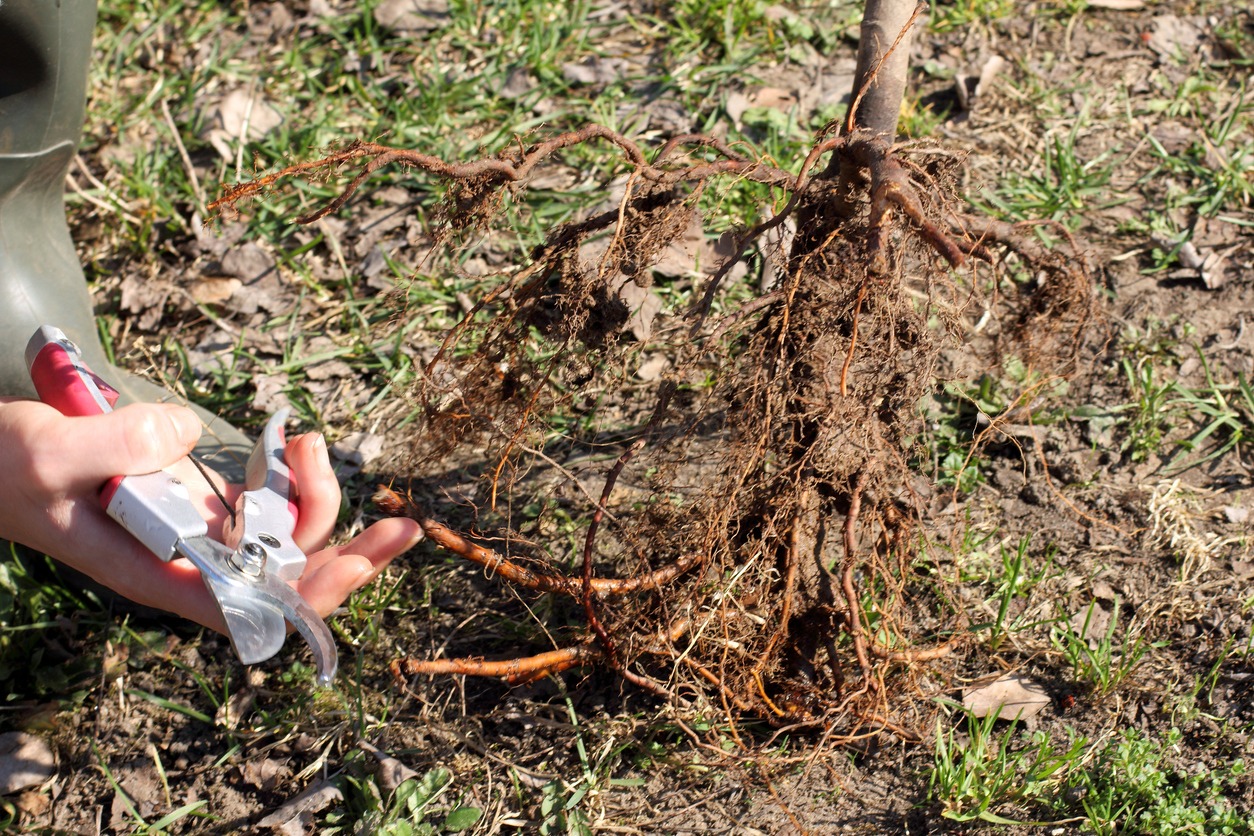
Root graft transmission is the most misunderstood aspect of oak wilt and the primary reason a single confirmed infection can destroy an entire oak stand without any beetle activity or visible wound.
How to stop oak wilt from spreading? It requires understanding how root grafts form. Oaks of the same species growing within 50 feet of each other routinely develop interconnected root systems through natural fusion. Water and nutrients pass freely through these connections — and so does Ceratocystis fagacearum. In a wooded lot on the bluffs south of Hudson, or in the oak corridors of Afton and River Falls, one infected tree can silently pass the disease to every connected oak in the stand over one or two growing seasons.
The geographic risk is specific. Properties with mature oak woodlands—common in Hudson’s south bluff, along the ridge communities in Afton and Stillwater, and in the wooded residential corridors of New Richmond—are at the highest root graft risk because natural tree spacing is tight. This is not a problem on a property with three scattered oaks in a lawn. It is a serious problem on a wooded lot where oaks have been growing together for decades.
Root graft barriers, trenching or vibratory plowing to four-foot depth, are the recommended mechanical intervention. These should be installed as soon as possible after a confirmed diagnosis, before the fungus has had a chance to spread underground. Waiting until next spring to install barriers after a late-summer diagnosis is a missed window.
Oak wilt management is a property-wide decision, not a single-tree decision. If one oak on your property is diagnosed, every other oak should be assessed and ideally, neighboring properties with oak stands should be notified. Willow River Company’s certified arborists can evaluate your full property and provide a treatment and protection plan that accounts for the whole stand.
If you have oaks in Hudson, Stillwater, or the surrounding St. Croix River Valley communities, request an arborist consultation with Willow River Company’s certified arborists.
Frequently Asked Questions About Oak Wilt Treatment
Can a tree survive oak wilt?
White oaks can survive with early propiconazole treatment and root graft disruption if the disease is caught before significant crown decline. Red oaks diagnosed with oak wilt rarely survive once visible symptoms appear. By that point the vascular system is compromised enough that treatment focuses on protecting surrounding trees rather than saving the infected one. A certified arborist assessment is the only way to determine whether treatment is viable for your specific tree and situation.
How much does oak wilt treatment cost?
Treatment cost depends on tree size, the number of trees requiring injection, site conditions, and whether root graft disruption is needed. Every property and oak stand is different. Willow River Company provides individual written quotes after an on-site arborist assessment. Contact us to schedule an evaluation and get an accurate scope for your property.
Can I prune my oaks in spring in Wisconsin?
The Wisconsin DNR and UW-Madison Extension advise against pruning oaks between April to September due to sap beetle activity and oak wilt spore transmission risk. Schedule oak pruning for late winter (December through early April) or after mid-September whenever possible. If storm damage requires emergency pruning during the restricted window, all wounds should be sealed immediately.
What should I do if I think my tree has oak wilt?
Stop all pruning immediately on any oak on the property. Do not transport wood or branches from the site. Call a certified arborist for an on-site assessment as soon as possible. Document the symptoms with photos before the arborist visit. The sooner a diagnosis is confirmed, the more options are available, both for the affected tree and for protecting every other oak on the property.
Don’t wait until leaf wilt becomes crown collapse. Early oak wilt treatment is always less costly, less disruptive, and more effective than reactive management after a stand has been compromised. Willow River Company has been protecting oaks across the St. Croix River Valley since 1987. Request an arborist consultation online to schedule your oak wilt assessment today.
Summary
Oak wilt treatment is a top priority for St. Croix River Valley homeowners, the disease spreads quickly, kills red oaks within weeks, and spreads underground through root grafts. Recognizing oak wilt symptoms early, like rapid crown browning and leaf retention, determines whether treatment is still viable. Understanding how to stop oak wilt from spreading requires professional fungicide injection, root graft disruption, and strict pruning timing.
Tags: