
Lawn Grubs and Surface Insects in the St. Croix River Valley: How to Protect Your Lawn Before the Damage Starts
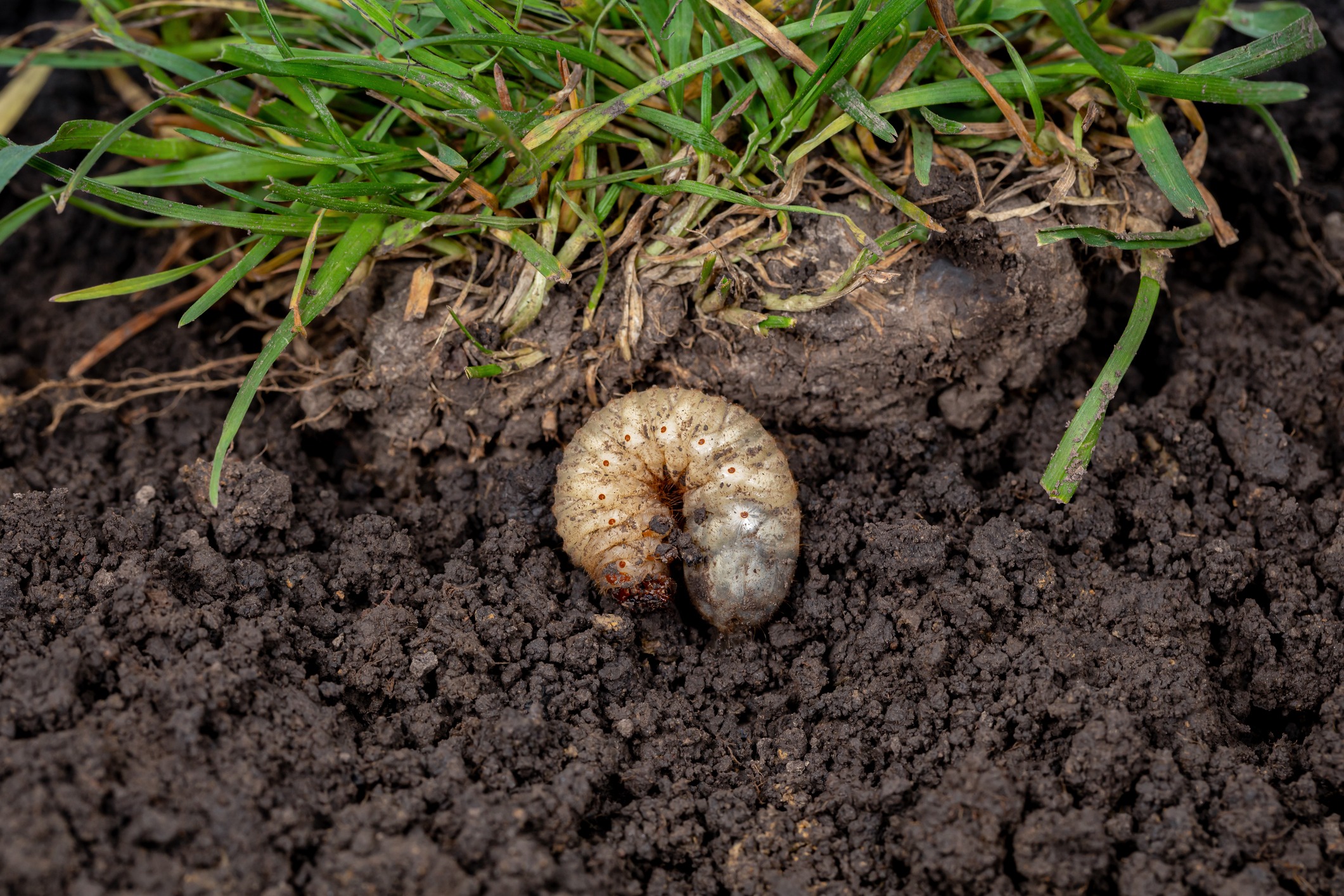
If you’ve noticed spongy turf, irregular brown patches, or an unusual number of crows and skunks digging up your yard this summer, lawn grubs are likely the culprit. A lawn that looks damaged despite consistent care is frustrating, and watching it deteriorate through summer while not knowing the cause makes it worse. Grub pressure across Hudson, New Richmond, and Lake Elmo has been climbing steadily for the past decade, and knowing how to get rid of grubs in your lawn before visible damage is important for St. Croix River Valley homeowners to understand. This guide covers what local lawn pest control professionals know about grub activity in this area and what you need to do before the damage takes hold.
Why Grub Pressure Is Particularly High in St. Croix River County
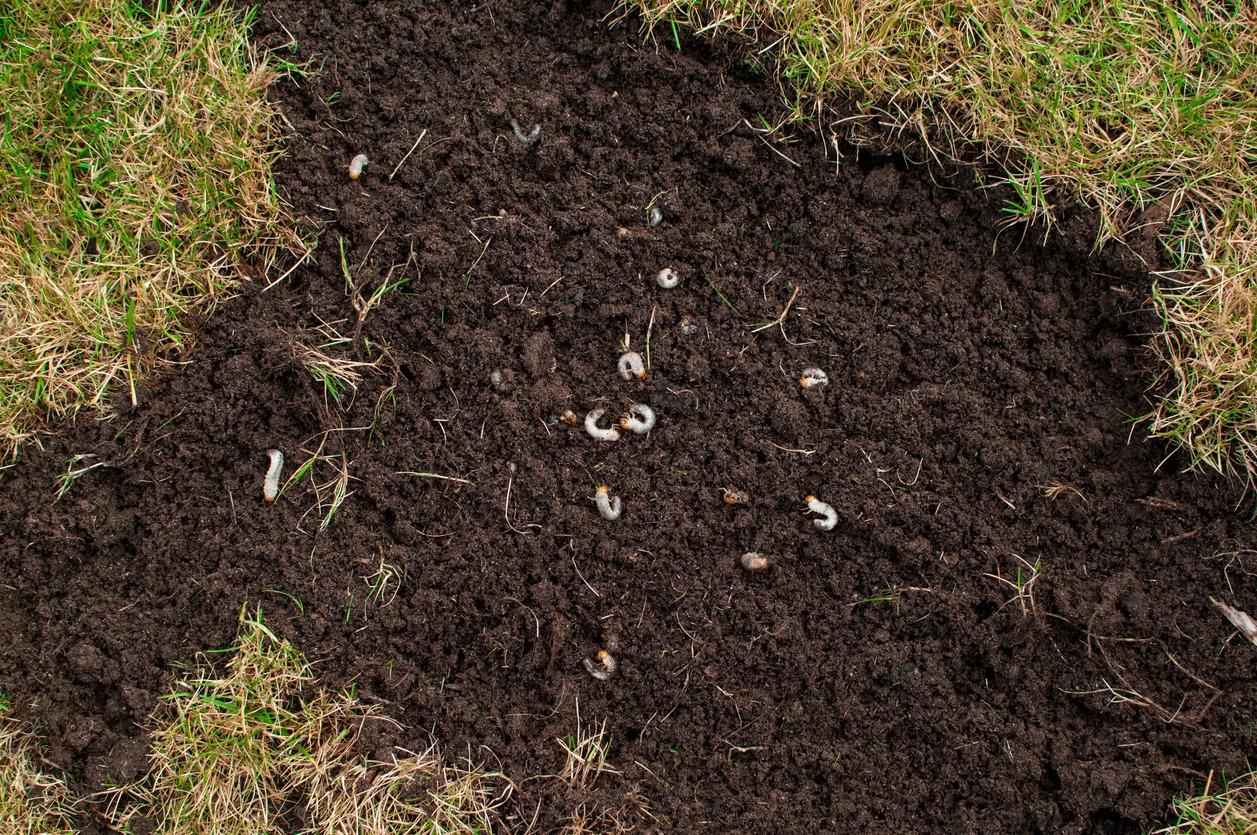
White grubs are the larval stage of several beetle species, with Japanese beetles and masked chafers causing the most lawn damage in the St. Croix River Valley. Their populations have continued to expand across western Wisconsin and eastern Minnesota, making grub issues increasingly common.
Local lawns are especially vulnerable because irrigated, sunny turf and moisture-retaining soils create ideal conditions for beetles to lay eggs during midsummer. St. Croix River County’s clay-dominant soils hold moisture close to the surface longer than other soil types, and most residential lots in Hudson, New Richmond, and Lake Elmo are open and sun-exposed — two conditions that consistently attract egg-laying beetles. Homeowners watering regularly through July, which is entirely reasonable in a dry summer, are often unknowingly making their lawns the most attractive target on the block. The result is that grub populations in this area tend to concentrate in well-maintained residential turf rather than neglected or shaded properties.
Properties in St. Croix River County that had no grub history five years ago are now seeing first infestations. If a neighbor has had problems recently, your lawn is no longer a safe distance from the issue.
St. Croix River County homeowners should unerstand that grub management has a narrow annual treatment window, and the difference in outcome between preventive treatment and rescue treatment is significant. Understanding that timing, not just which product to use, is what separates effective grub control from expensive disappointment.
How to Tell if Your Lawn Has a Grub Problem
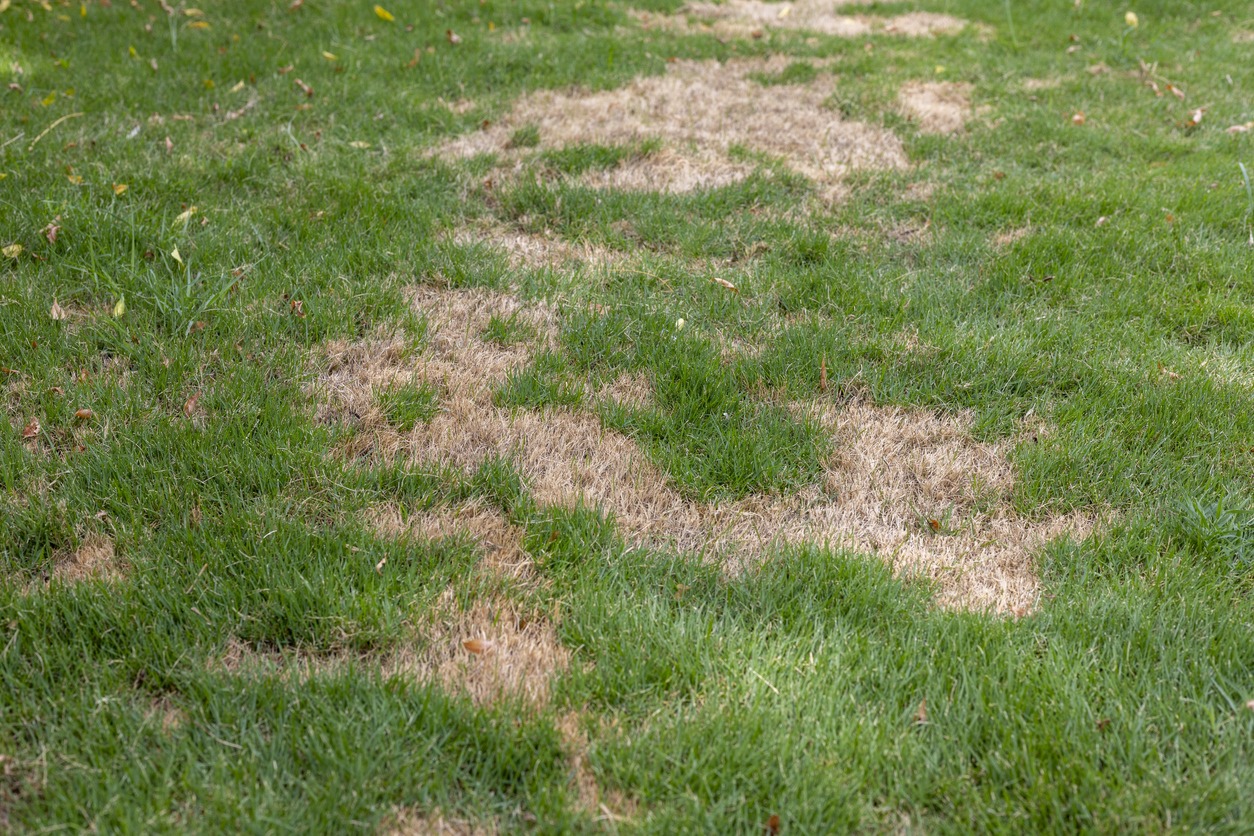
Grub damage doesn’t always announce itself clearly. In the early stages, white grub lawn damage can look like drought stress or patchy irrigation coverage. If you’re trying to figure out how to get rid of grubs in your lawn, start by confirming you actually have them. Here’s what to look for:
- Spongy, soft turf in summer (July–August). Walk across your lawn and notice whether the surface feels loose or slightly unstable underfoot. When grubs sever the root zone below the turf, the grass is no longer anchored to the soil. This spongy sensation in otherwise healthy-looking turf is often the first warning sign.
- Irregular brown patches that don’t respond to watering. Drought stress browns grass uniformly across a dry area. Grub damage appears in irregular patches with distinct, sometimes hard-edged boundaries. If you’re running your irrigation system and certain patches stay brown regardless, pull back a corner of the affected turf. If it lifts away from the soil like a loose carpet with no root attachment, grubs have been feeding below.
- Bird and wildlife activity. Crows, starlings, skunks, and raccoons are all efficient grub hunters. Fresh digging holes scattered across your lawn in July or August, especially if they appear overnight, are one of the clearest field signs of a grub population.
Confirm with the soil peel test. Pull back a one-square-foot section of turf in a suspect area and count the grubs visible in the top two to three inches of soil. Wisconsin’s treatment threshold is 8–10 grubs per square foot. Below that number, most healthy, well-rooted lawns can tolerate the population without visible damage. Above it, treatment is warranted.
One additional note for Hudson and New Richmond homeowners specifically: the clay-heavy soils common in this part of St. Croix River County retain moisture near the surface longer than sandier soils do. That moisture retention makes your lawn disproportionately attractive to egg-laying adult beetles in July compared to drier properties further inland. It is a soil characteristic that raises baseline grub risk, independent of how you manage your lawn.
How to Get Rid of Grubs in Your Lawn
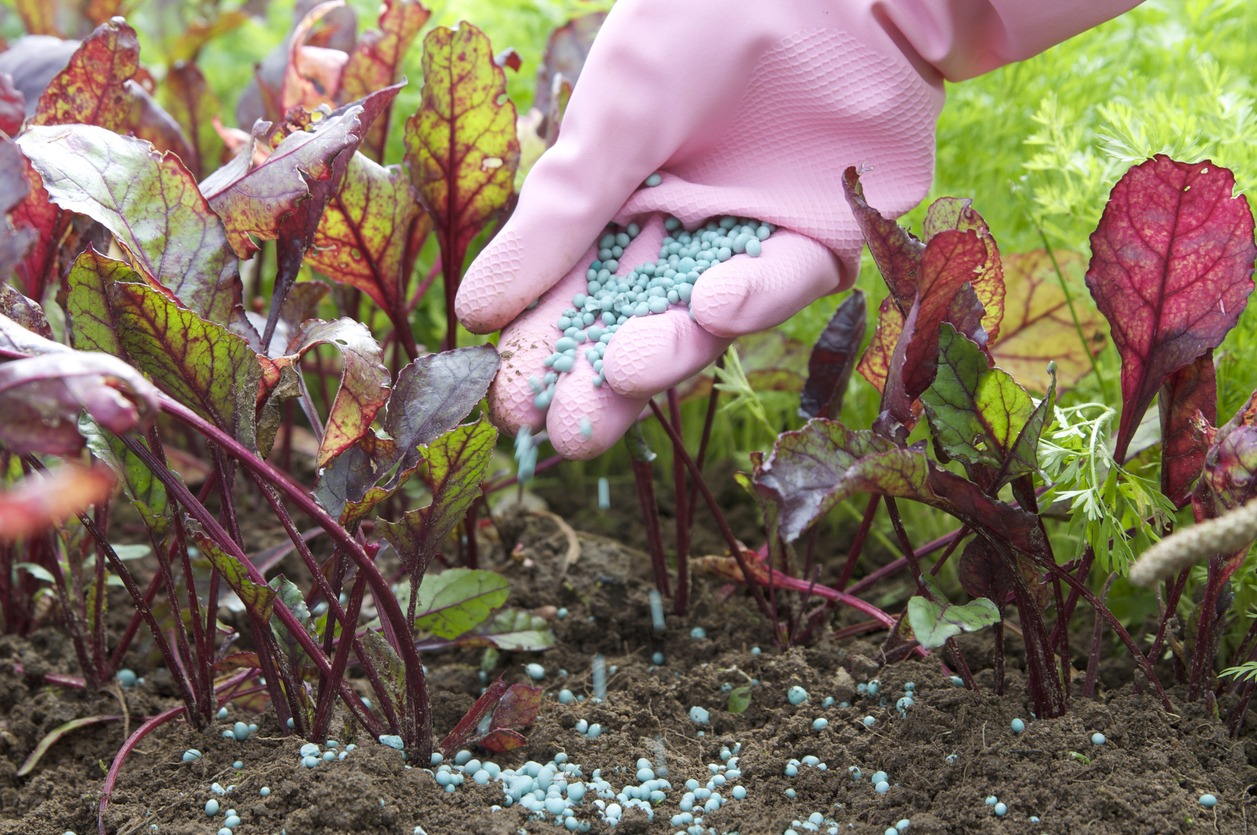
Getting rid of grubs in your lawn comes down to three things: identifying the problem early, applying the right product, and doing it within the correct window. Applying grub treatment at the wrong time produces little to no result, regardless of the product used. Most homeowners who have struggled to control grubs in their lawn were not using the wrong treatment, they were simply using it outside the effective window.
The Preventative Treatment window for Grub Control in Wisconsin: When to Act
Effective grub control requires accurate timing relative to adult beetle egg-laying and egg hatch. In St. Croix River County, that window is outlined below:
- Mid-to-Late June: Adult Japanese beetles and masked chafers begin emerging from the soil and laying eggs in irrigated turf. The vulnerability window opens.
- First Three Weeks of July: Peak egg-laying period. Preventive insecticide applications made during this window target eggs and newly hatched first-instar larvae in the top inch of soil – the stage at which they are most susceptible to treatment and closest to the surface.
- Late July Through August: Larvae develop through their second instar and move progressively deeper into the soil profile. As they descend below the treated zone, the effectiveness of preventive products drops sharply. By mid-August, the preventive window has largely closed.
The two most commonly used preventive active ingredients in Wisconsin are imidacloprid and chlorantraniliprole. Chlorantraniliprole has a slightly wider application window, it can be applied from May through early July, and is generally preferred by professional applicators in the St. Croix River Valley for irrigated properties because irrigation activates the product efficiently and reliably.
Irrigation and watering matters more than most homeowners realise. Preventive grub insecticides must be watered into the top two to three inches of soil within 24 hours of application. Properties with irrigation systems get consistent, timely activation. Properties without irrigation are dependent on rainfall, and the St. Croix River Valley’s July weather is variable enough that a missed rain event after application can significantly reduce effectiveness. This is one of the strongest arguments for professional application scheduled around your irrigation system’s output.
Grub Treatment Lawn Repair for Active Infestations
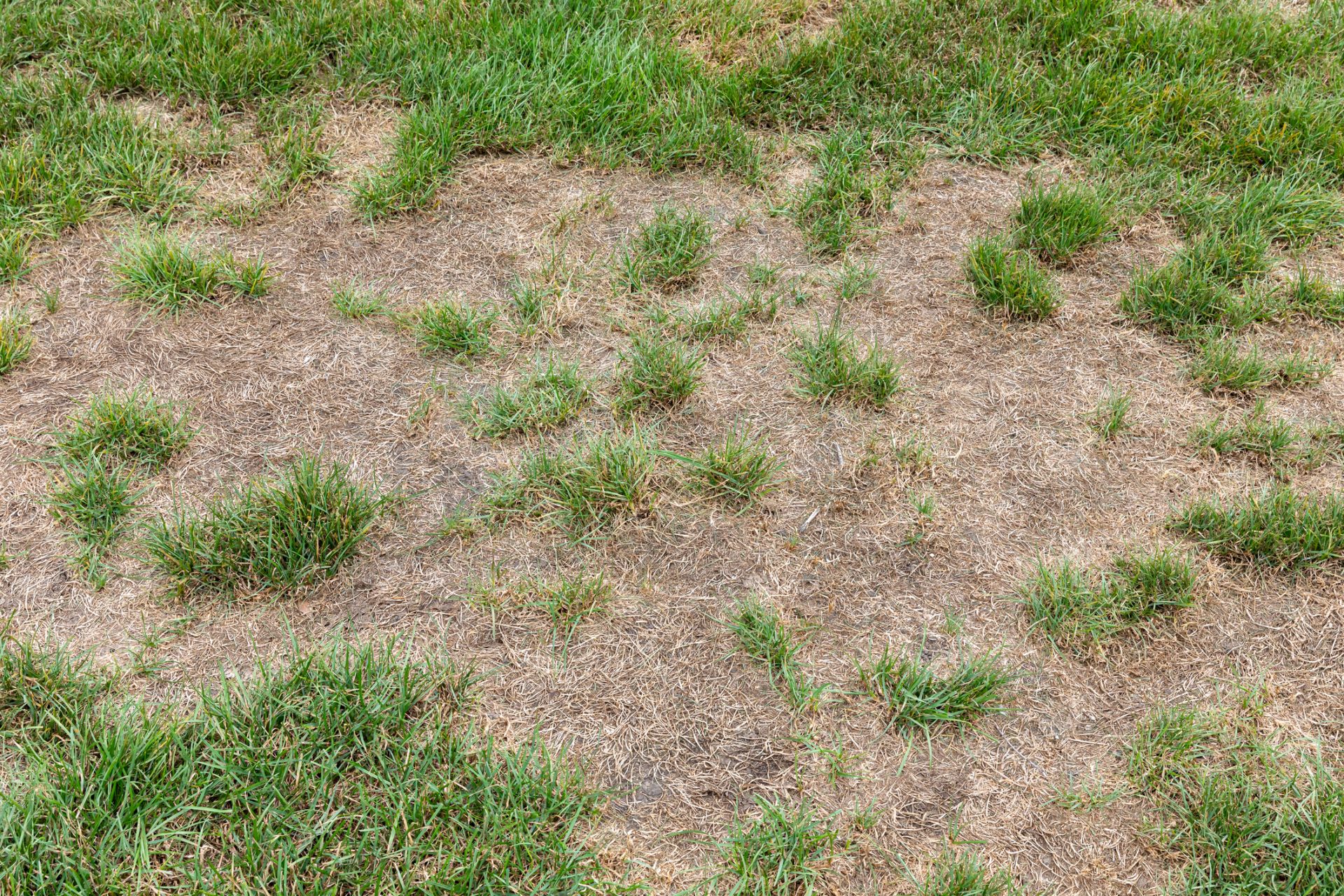
If the preventive window has passed and you’re already seeing visible turf damage in August or September, rescue treatment is still an option. However, it is less effective than preventive grub treatment, more expensive relative to the outcome it produces, and it doesn’t undo the turf damage that has already occurred.
The standard rescue active ingredient is trichlorfon (sold as Dylox). It works on late-instar larvae but requires higher application rates and more precise placement than preventive products. Apply as soon as damage is confirmed, before larvae migrate below three inches depth in late September. Once grubs move deeper to overwinter, rescue treatment becomes largely ineffective until the following spring.
Even a successful rescue treatment leaves the turf visibly damaged. The bare and thinned areas left by grub feeding require a follow-up programme of lawn aeration and overseeding in late August and September to recover. That repair work – breaking up compacted soil, introducing new seed into the damaged zones – is what actually restores the lawn. Rescue treatment stops the damage; aeration and overseeding reverses it.
The sequencing here matters: rescue treatment in August, followed by aeration and overseeding in September, is the complete response to a confirmed infestation. One without the other leaves the job half done. For a more comphrensive understanding of lawn care, read our lawn care service guide.
Long-Term Lawn Insect Control Wisconsin
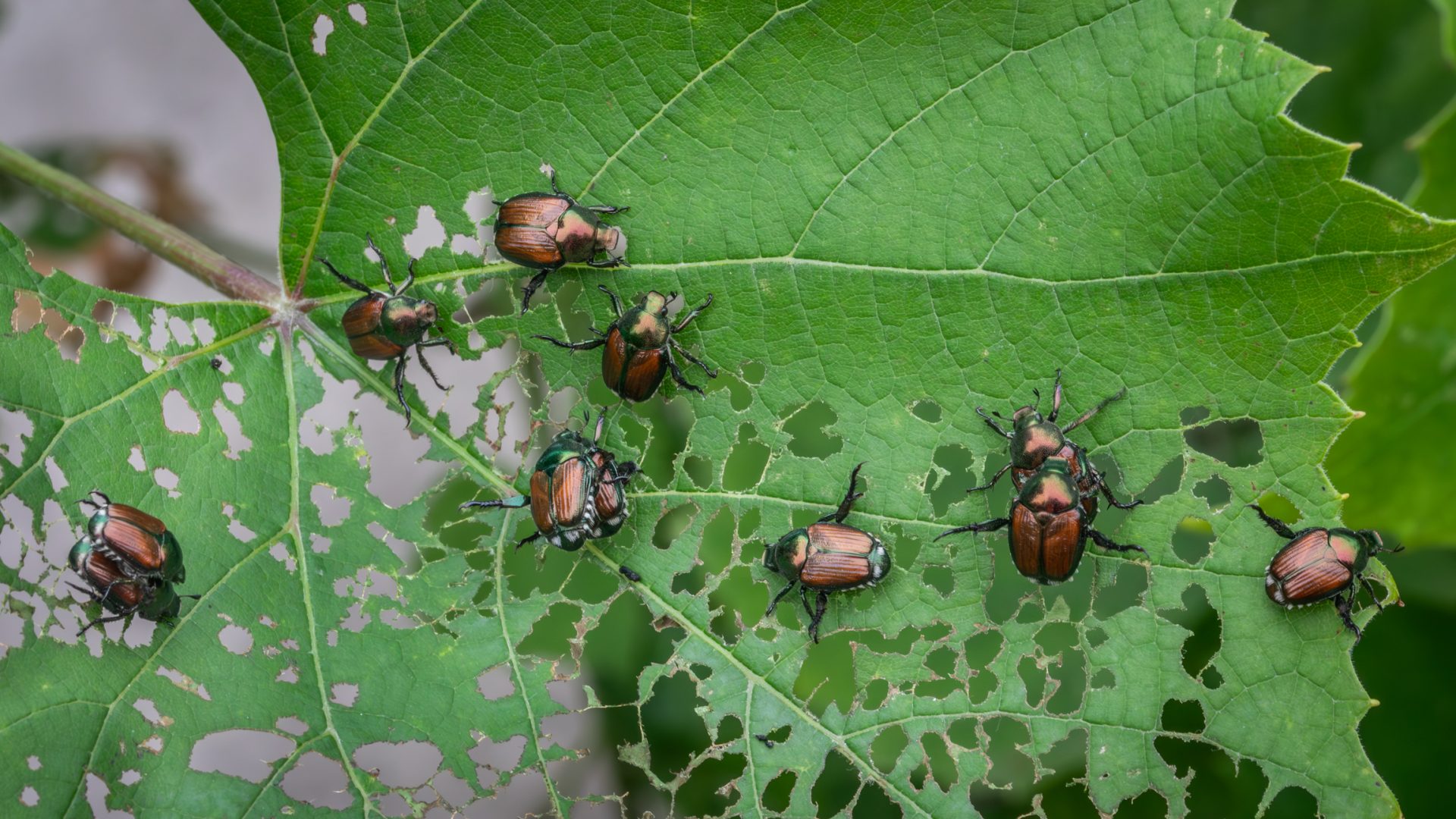
Annual preventive applications are the most effective way to control established grub problems, but long-term resistance starts with a healthy lawn. Dense, deep-rooted turf can tolerate more grub activity with less visible damage, while thin lawns are far more vulnerable. Consistent lawn care and maintenance, especially aeration and fall overseeding, helps to build stronger roots and improve your lawn’s natural defense against grubs.
Regular mowing, fertilization, watering, and seasonal treatments help strengthen root systems and improve your lawn’s natural resistance to pests and stress. Learn more about our lawn care & maintenance services to keep your lawn healthy year-round.
Proper irrigation management in July can also help reduce grub pressure. Adult beetles prefer moist soil for laying eggs, so allowing the top inch of soil to dry slightly between watering cycles can make your lawn less attractive without harming healthy turf.
It’s also important to remember that Japanese beetles damage more than lawns. As adults, they feed heavily on ornamental plants like roses, crabapples, and fruit trees. If you’re noticing both turf damage and chewed foliage, the same pest is likely responsible – making an integrated lawn and landscape treatment approach far more effective.
Check our lawn care service guide, which are designed around exactly this kind of integrated, season-long management – from preventive grub treatment timed to St. Croix River County’s beetle emergence patterns, to fall aeration and overseeding for root development, to tree and shrub care for properties where Japanese beetle adults are hitting ornamentals as well as turf.
Why Lawn Health Is Your Best Defense Against Grubs

Effective grub control isn’t just one treatment — it’s about creating a lawn and landscape that’s less vulnerable to damage overall. Preventive applications, proper irrigation practices, healthy root development, and ongoing lawn care all work together to reduce grub pressure and improve turf resilience. Since Japanese beetles also affect ornamental plants, taking an integrated approach to both lawn and landscape care delivers the best long-term results.
Ready to get ahead of the problem? Contact our team for expert assistance with grub control and lawn care tailored to your St. Croix River Valley property.
Summary
This guide has covers what St. Croix River Valley homeowners need to know about lawn grub control: local soil and irrigation conditions that raise baseline grub risk, how to spot an active infestation, the late June through mid-July preventive treatment window, rescue options for established damage, and the integrated lawn care approach that builds long-term turf resilience. Willow River Company’s certified technicians provide full lawn pest control services across St. Croix County and the Twin Cities eastern suburbs.
Tags: