
Deep Root Fertilization and Tree Health in the St. Croix River Valley: Why Your Trees May Need More Than Mulch
The 60-year-old oak at the edge of your lawn looks the same as it always has, until you notice the crown is a little thinner than last year. The leaves are smaller. There is less new growth at the tips. Nothing dramatic, nothing alarming, but something has shifted. That tree is telling you something, and the answer is rarely as simple as more mulch.
For homeowners across Hudson, Stillwater, River Falls, and the surrounding St. Croix River Valley communities, this kind of slow, quiet decline is one of the most common tree health patterns we see. It is also one of the most treatable when caught before the deficit becomes structural. Targeted root-zone treatment is often the right first step, and this guide explains why surface applications alone are frequently not enough for mature trees growing in the soils that define this part of Wisconsin and Minnesota.
For the full picture of what Willow River Compay’s arborists assess and treat, see our tree service guide for the Hudson, WI area.
Why Trees in the St. Croix River Valley Struggle Even When They Look Established
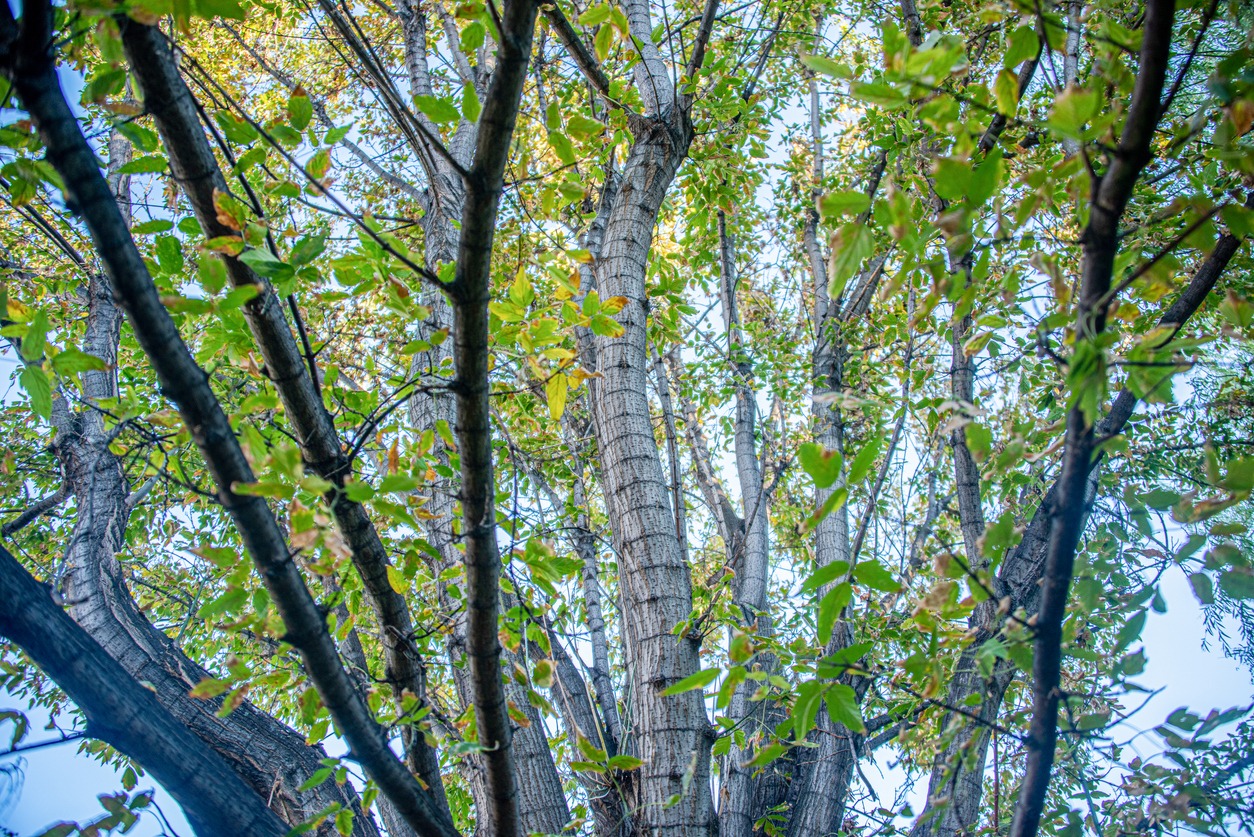
Age and size are not the same as health. Hudson’s Hill neighborhood, the older residential streets of River Falls, and Stillwater’s south-hill properties are full of large, well-established trees like oaks, elms, and maples that have been in the ground for decades. Many of those trees are quietly stressed in ways that don’t announce themselves until the decline is already underway.
Soil compaction is the most common culprit. Decades of mowing, foot traffic, and vehicle access near the root zone gradually compress the soil structure around a tree’s feeder roots. Compacted soil loses its ability to hold oxygen and allow water to move freely. These are two conditions that feeder roots depend on entirely. The USDA Web Soil Survey classifies much of St. Croix County’s residential soil as clay-rich, particularly in valley-floor communities and in developed areas around Hudson and New Richmond. Clay soils compound the compaction problem: they drain poorly, warm slowly in spring, and hold almost no air space once they are compacted.
Construction and grade changes are another common cause of decline that homeowners don’t immediately connect to the tree. A driveway extension, a basement addition, or a drainage reroute that happened five or six years ago can be the reason a mature maple is thinning today. Root zones are large, often extending well beyond the tree’s drip line, and any significant soil disturbance within that radius has consequences. For a deeper look at how construction activity affects trees, see our post on protecting trees during construction.
Turfgrass competition is a third factor that rarely gets enough attention. When trees grow in maintained lawn areas, which most residential trees in Hudson and River Falls do, they compete with turfgrass for surface nutrients and moisture. Surface-applied lawn fertilizer is taken up almost entirely by the turf before it reaches tree roots at depth. The tree gets very little benefit.
What Deep Root Fertilization Actually Is (And Why It Works Better Than Surface Application)
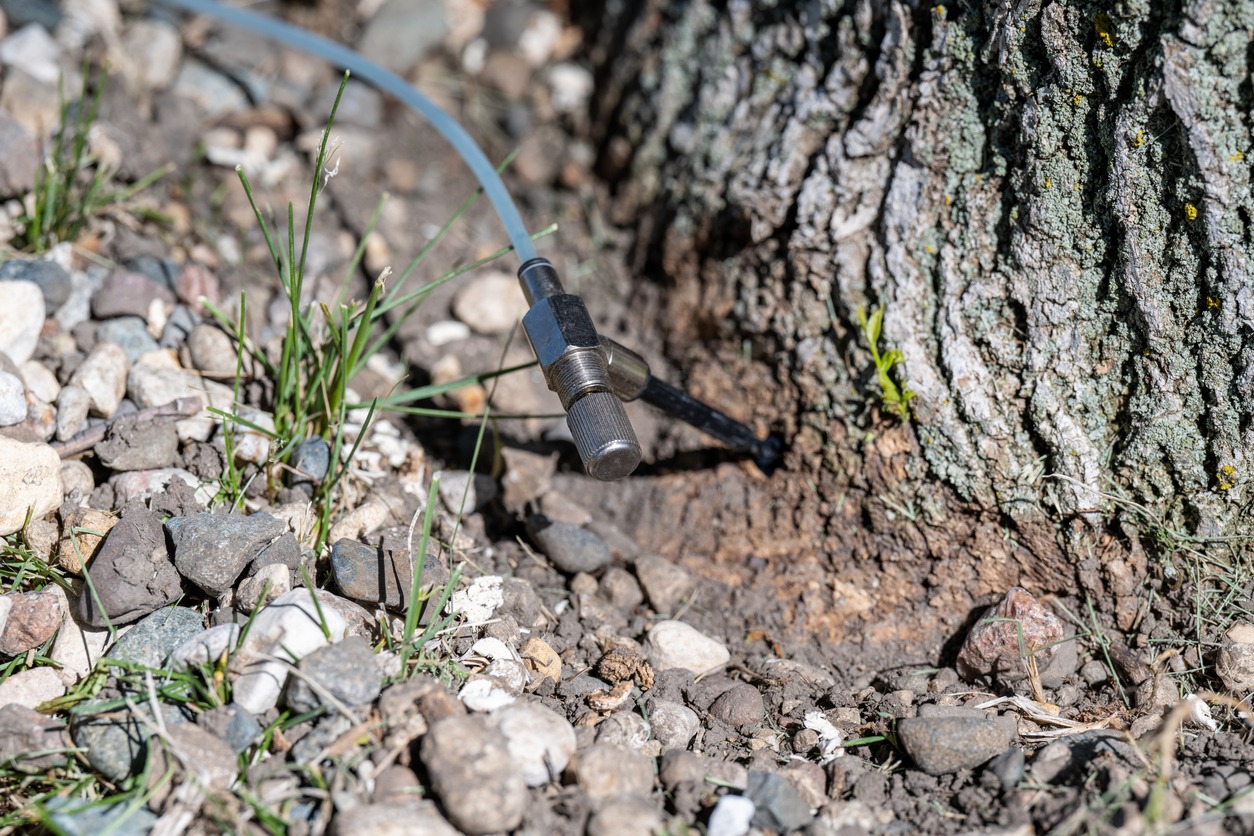
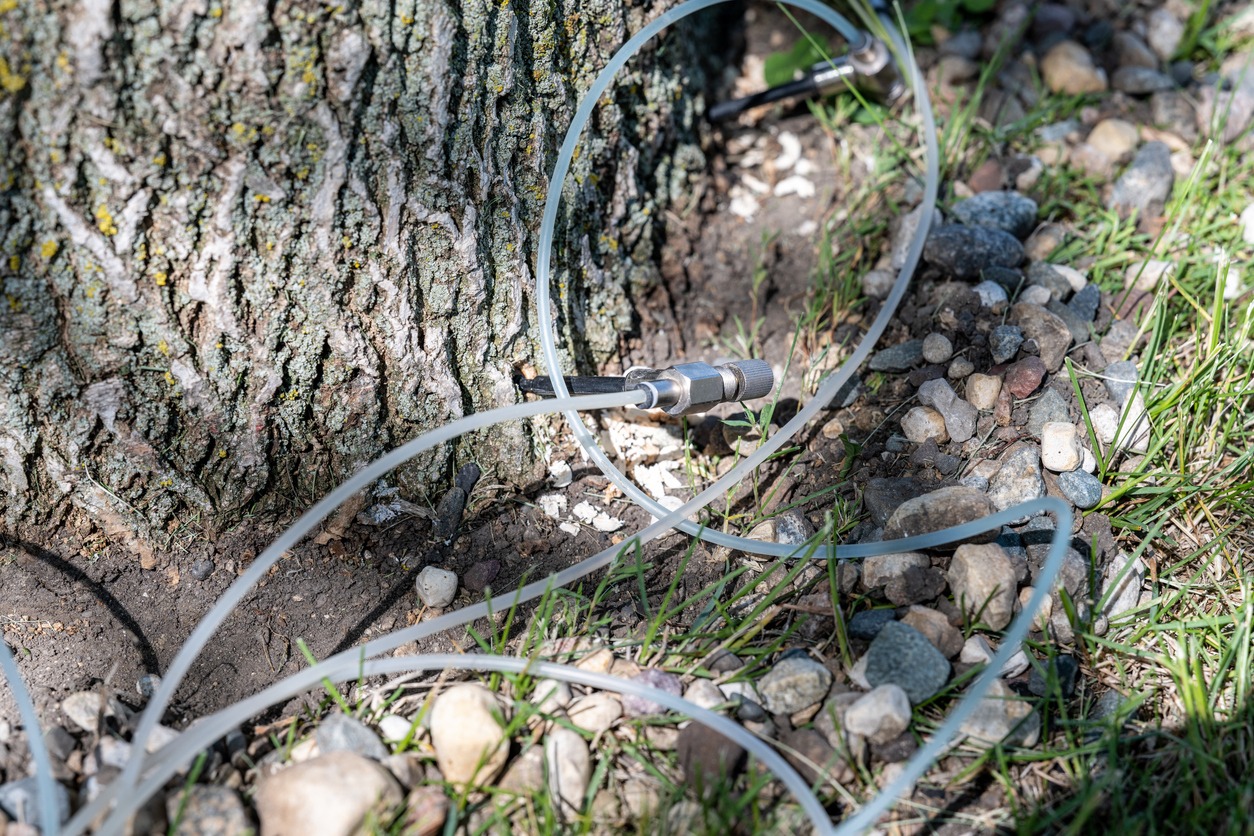
Deep root fertilization delivers liquid nutrients directly into the root zone using a pressurised injection probe inserted 8–12 inches below the surface. The probe bypasses the compacted surface layer entirely, placing the nutrient solution precisely where feeder roots are actively absorbing.
That distinction matters more than it might seem. Standard tree fertilization applied to the lawn surface, whether granular or liquid, is taken up primarily by turfgrass before it has any chance to migrate to tree root depth. In a compacted clay soil like those common in Hudson and New Richmond, surface migration is even slower and less predictable. The tree receives a fraction of what is applied.
A professional soil injection tree care approach also mechanically aerates the root zone. As the probe is inserted and the liquid is delivered under pressure, it displaces soil, creating small pockets that improve oxygen exchange and water infiltration. For trees growing in compacted clay that has had little natural aeration in years, this mechanical disruption is itself beneficial.
The nutrient formulation used in professional deep root service is not the same as a tree root fertilizer stake from the hardware store. Consumer products are designed for general use; professional mixes are balanced NPK formulations with micronutrients, adjusted for the tree’s vascular uptake pattern and soil chemistry. Willow River Company’s arborists conduct a site assessment before treatment to confirm the appropriate formulation for the species and soil conditions.
This service is not the same as a soil drench. A drench applies liquid at the surface and relies on normal water infiltration to carry it downward. In compacted soils, this is significantly less effective than direct injection at root depth. The UW-Madison Extension fertilization guidelines address this distinction and provide useful context for understanding how tree root systems absorb nutrients under different soil conditions.
Which Trees in the St. Croix River Valley Benefit Most from Deep Root Fertilization?
Mature Shade Trees Showing Early Decline
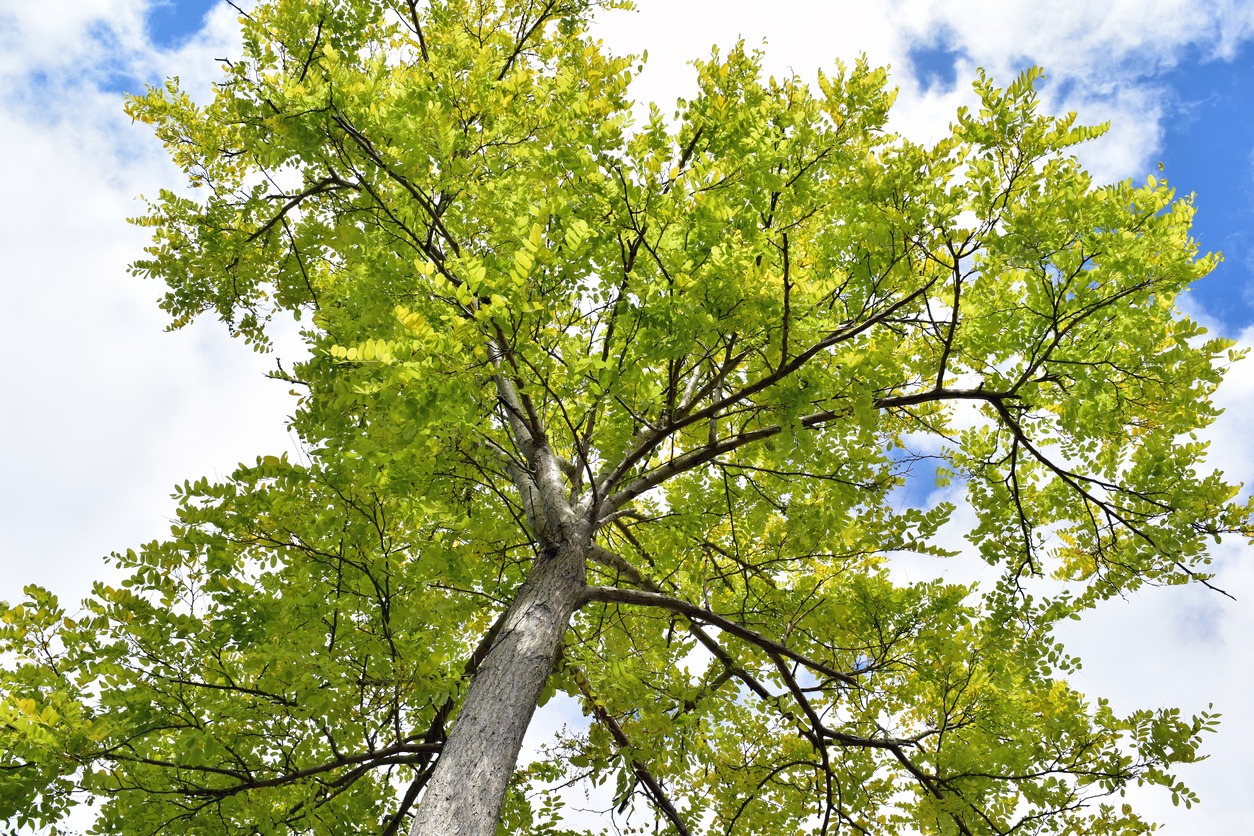
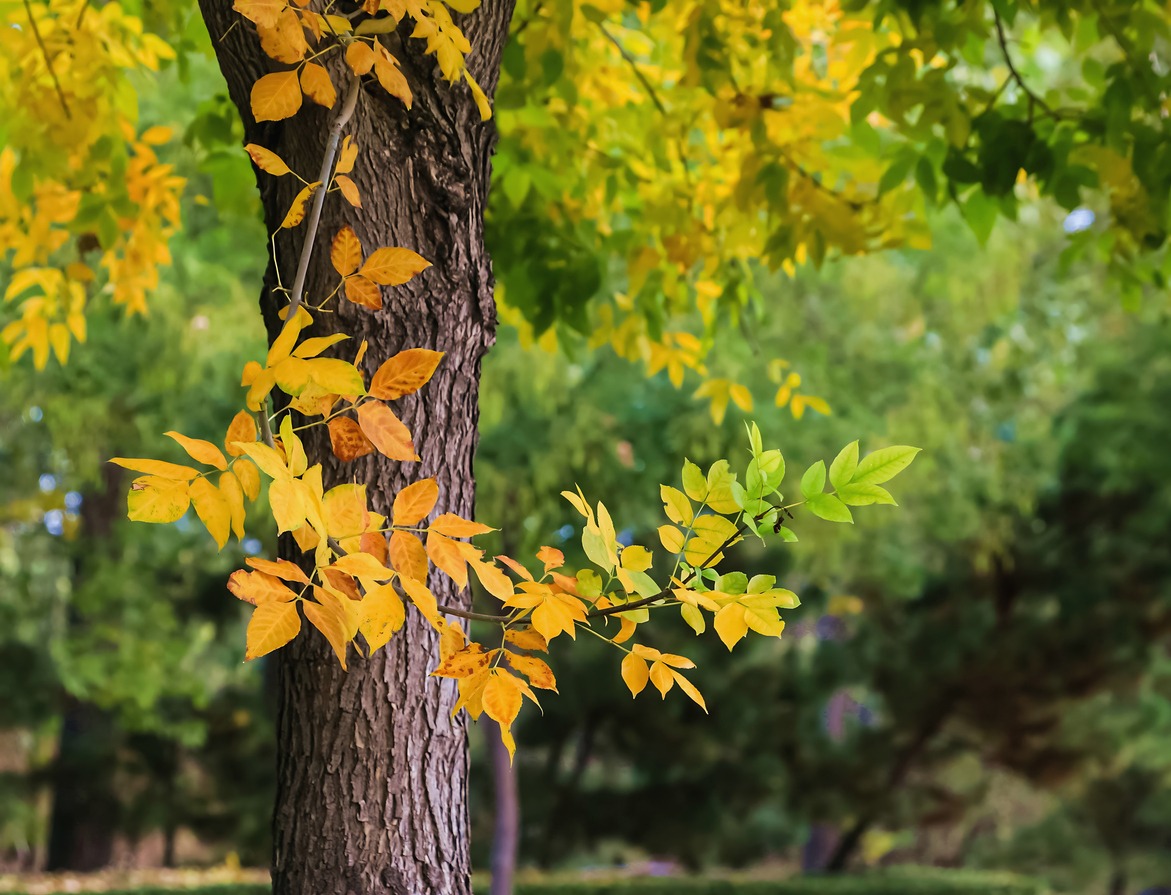
Oaks, elms, and maples in established Hudson and Stillwater neighborhoods are prime candidates when they show crown thinning, smaller-than-normal leaf size, or reduced annual twig growth. These are not trees in crisis, they are trees that have been operating on a nutrient deficit long enough that it is becoming visible. The treatment addresses that deficit directly.
Trees Recovering from Stress Events
A tree that has been through emerald ash borer treatment, post-oak wilt propiconazole injection, storm damage, or drought stress has depleted its stored reserves. Nutrient and soil aeration support during recovery accelerates the tree’s return to vigor and reduces the window of vulnerability to secondary infection or structural failure.
Trees in Compacted Soil Environments
Any tree growing in a maintained lawn, near a driveway or sidewalk, or in a high-foot-traffic area in Hudson, New Richmond, or River Falls is a candidate, regardless of whether visible symptoms have appeared yet. The soil conditions alone are sufficient to justify proactive treatment on mature, high-value specimens.
Young Transplants in the Establishment Phase
Trees in their second through fifth years respond well to this targeted nutrient treatment as a supplement to regular watering. The treatment accelerates root establishment and improves survival through stressful Wisconsin winters.
Trees That are Not Candidates
A tree in advanced structural decline, significant trunk decay, major root failure, or crown collapse, is not a fertilization candidate. Nutrients cannot reverse structural damage.
How Deep Root Fertilization Fits Into a Plant Health Care Program
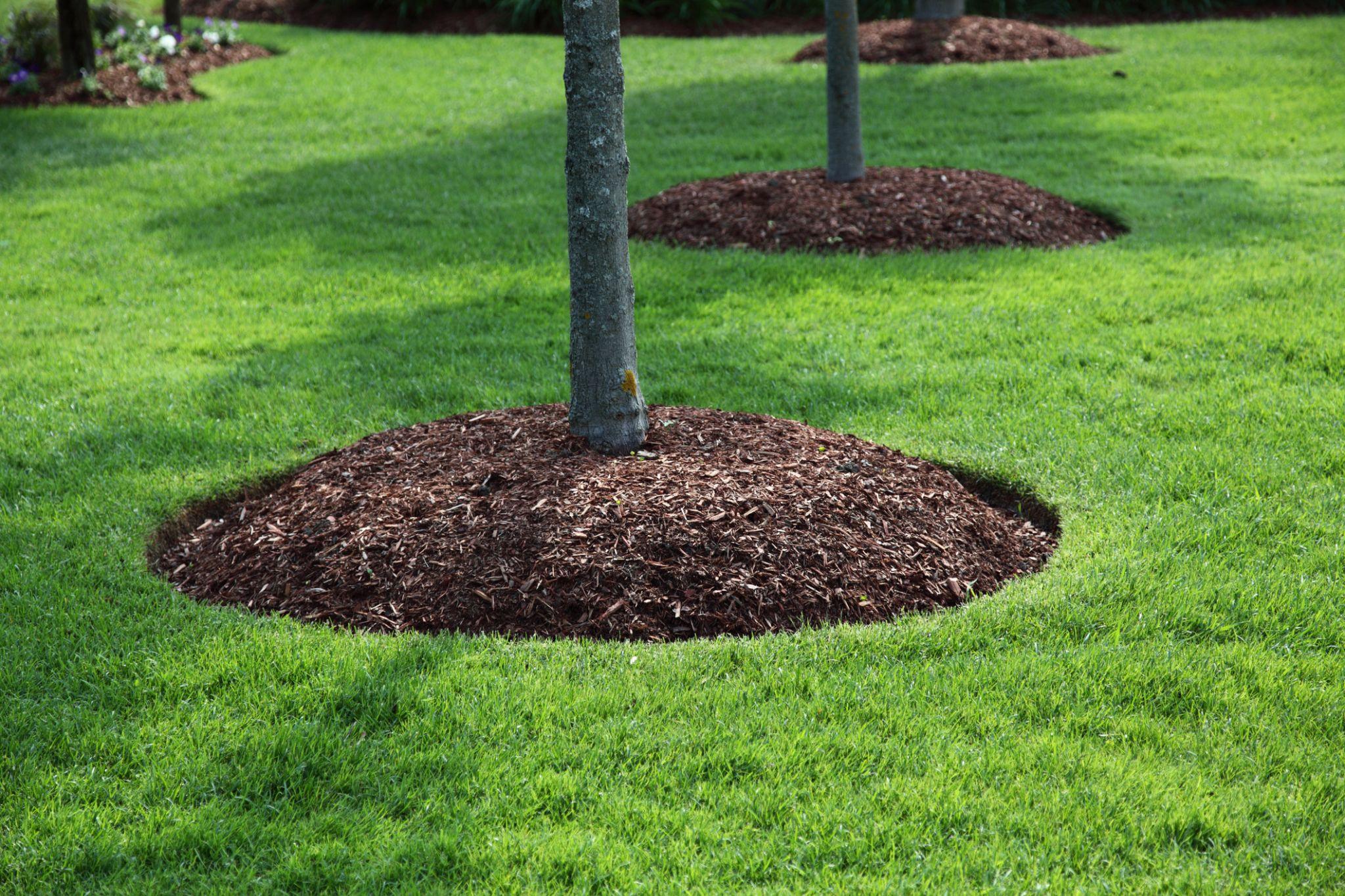
This service works as a powerful tool on its own, but it works best as part of a broader approach. The International Society of Arboriculture defines this systematic program of preventive and responsive treatments like soil management, pest and disease monitoring, structural assessment, and targeted intervention, as the foundation of long-term tree stewardship.
That framework is exactly what the St. Croix River Valley climate demands. Wisconsin winters deliver freeze-thaw stress on root systems, ice loading on crowns, and winter desiccation on broadleaf trees. Clay soils accumulate compaction season over season. Emerald ash borer and oak wilt are documented, ongoing threats across Hudson, Stillwater, and New Richmond. A tree that weathers one difficult season recovers. A tree that accumulates ten consecutive stressful seasons without nutritional support eventually fails.
Proactively maintaining tree health care is always less costly than reactive management. Willow River Company’s full tree treatments menu (from arborist assessment through targeted treatment with deep root fertilizer for trees, pest management, and structural pruning) covers the full spectrum of what mature trees on a St. Croix River Valley property may need.
For homeowners with multiple trees, Willow River Company’s WRX program builds scheduled arborist visits into your annual service calendar, so assessments and treatments happen proactively, not only when a problem becomes visible. For the full range of tree health services Willow River Company provides across Hudson and the St. Croix River Valley, see our tree service guide for the Hudson, WI area.
When to Schedule Deep Root Fertilization in Wisconsin and Minnesota?
Timing matters for this service in the Upper Midwest. The two optimal windows are late fall, after leaf drop but before hard freeze, and early spring, before bud break. Both allow the tree to absorb stored nutrients during the metabolically active early-season push.
In the Hudson, WI climate, fall treatment typically means late October through November. Spring treatment means April. Both are effective; the right choice depends on the tree’s current condition and history.
- Fall Treatment: It is particularly well-suited for trees that showed stress during the growing season (crown thinning, early leaf drop, or dieback observed over the summer). After the tree finishes above-ground growth, the nutrients delivered by a tree fertilization service are directed toward root development and replenishing stored reserves rather than supporting active canopy growth.
- Spring Treatment: It suits trees coming out of a hard winter, newly transplanted trees entering their second or third season, or trees in active recovery from pest treatment. It gives the tree a nutrient advantage heading into the growing season, rather than starting from a depleted state.
One Wisconsin-specific note: hard freezes in the St. Croix River Valley can arrive in mid-October in colder years. If you want fall treatment, schedule it in September or early October; do not wait until November, as you risk a frozen soil window. Willow River Company plans fall plant health visits well in advance. Once the ground is frozen, the season is over.
Summer fertilization during active drought stress is not recommended without also addressing the water deficit because nutrients require adequate soil moisture to be absorbed. An arborist will assess soil conditions before confirming whether a mid-season visit makes sense for your trees.
Willow River Company’s certified arborists assess soil conditions and tree health on-site before recommending any treatment. Request your consultation online because fall scheduling fills up quickly across Hudson, Stillwater, and the St. Croix River Valley.
Frequently Asked Questions About Deep Root Fertilization
How often should trees be deep-root fertilized?
Most mature shade trees in the St. Croix River Valley benefit from this treatment every one to three years, depending on soil conditions, tree species, and the results of a site assessment. Trees in high-stress environments (compacted soil, construction impact, past pest treatment) may benefit from annual visits.
Is deep root fertilization safe for my lawn and garden beds?
Yes. The nutrient solution is injected below the turfgrass root zone and is formulated for tree uptake. The injection process may leave small surface marks that close within a few days, but it causes no damage to lawn or garden bed plants.
Can I deep-root fertilize my trees myself?
Consumer-grade deep-root watering stakes exist, but they do not deliver the depth, pressure, or nutrient formulation of professional equipment. For established shade trees showing signs of stress, the cost difference between DIY staking and professional injection equipment is small relative to the tree’s value and the difference in results.
Which trees in the St. Croix River Valley benefit most?
Both youn and mature oaks, elms, maples, and ashes recovering from EAB treatment can benefit, along with any tree growing in compacted urban or suburban soil in Hudson, River Falls, or Stillwater. A certified arborist assessment confirms whether your specific trees are suitable candidates based on current health and soil conditions.
Your trees are one of the most valuable assets on your property, both financially and otherwise. Willow River Company has been managing tree and plant health across the St. Croix River Valley since 1987. Schedule a consultation with our certified arborist today.
Summary
Mature trees across Hudson, Stillwater, and River Falls quietly decline when compacted clay soils starve their roots of oxygen and nutrients. Deep root fertilization bypasses surface layers, delivering nutrients directly where feeder roots absorb them. It is the cornerstone of proactive tree health care, and a far more effective approach than any tree fertilization service applied at the surface.
Tags: