
Buckthorn Removal in the St. Croix River Valley: Why This Invasive Plant Is Harder to Kill Than You Think
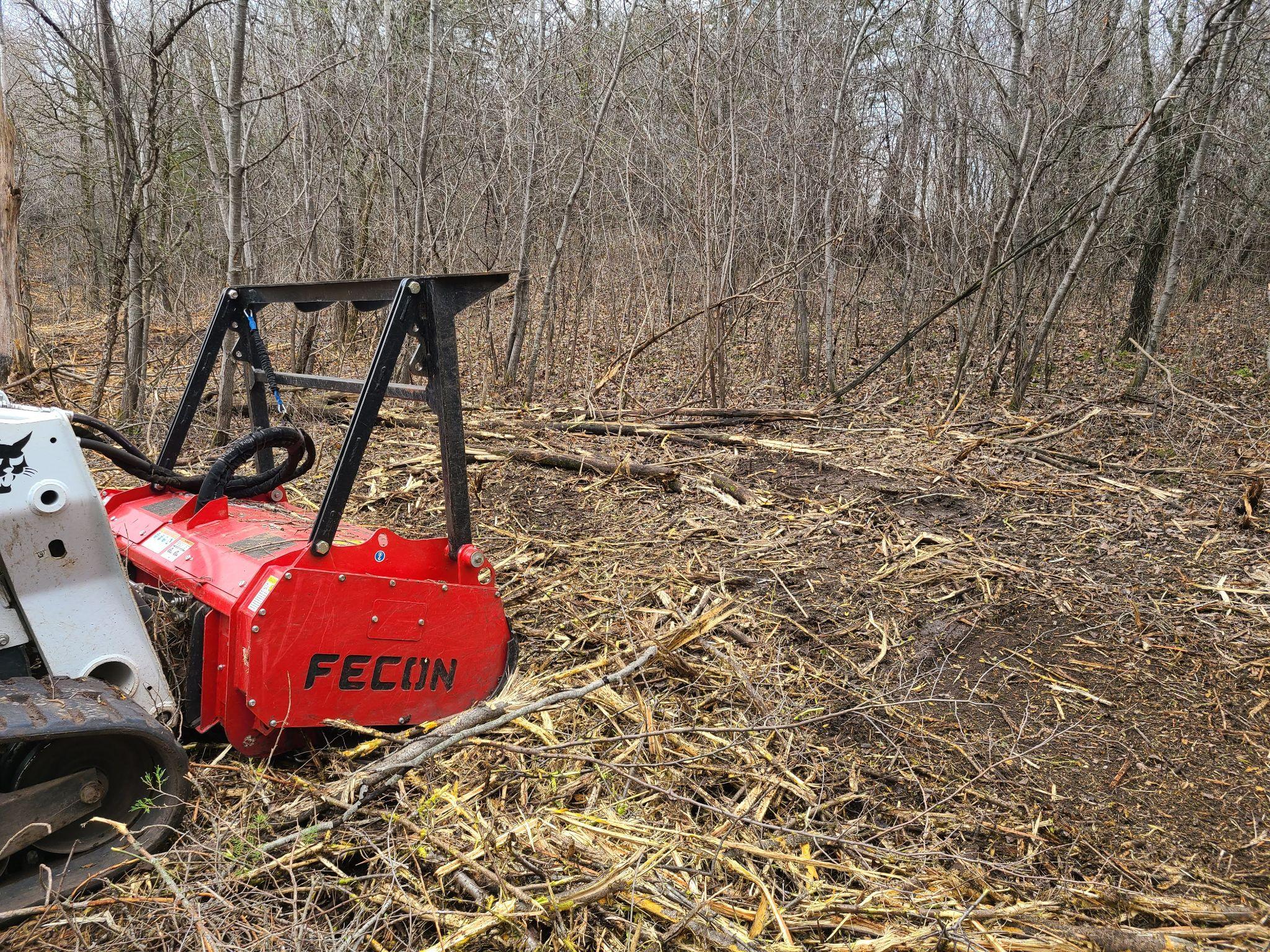
You probably noticed it first along the back fence line: a dense wall of shrubs that leafed out earlier than everything else in spring and is still green while the rest of your yard has gone dormant. If that description sounds familiar, you are likely looking at buckthorn. And if you have already tried cutting it back and watched it return thicker than before, you have already learned the first hard lesson.
Buckthorn removal is not like pulling weeds. It requires the right method, the right timing, and, for anything beyond a small infestation, a systematic approach that prevents it from coming back worse the following year. This guide covers what St. Croix River Valley homeowners need to know to handle it correctly, whether you are dealing with a handful of plants along a fence line or a wooded lot that has been overtaken.
For the full range of tree and property services Willow River Company provides across the St. Croix River Valley, see our tree service guide.
Why Buckthorn Is Such a Problem in Western Wisconsin and the Twin Cities?
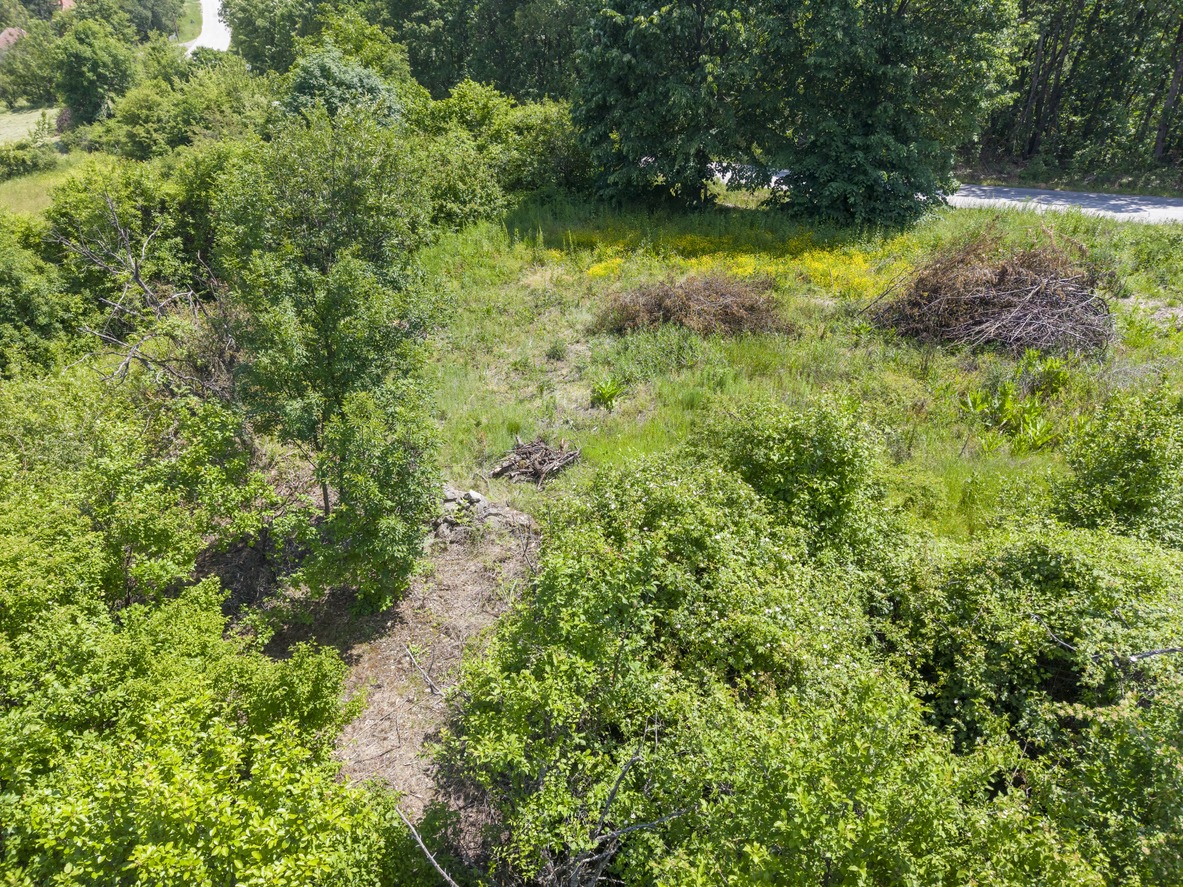
Common buckthorn (Rhamnus cathartica) has been establishing itself in the St. Croix River Valley for decades, and it is now one of the most visible landscape problems across Hudson, Stillwater, Afton, River Falls, and the surrounding communities. What began as a woodland edge problem has moved firmly into residential back lots, bluff-side properties, and riparian corridors throughout the region.
The Wisconsin DNR classifies both species as regulated invasive species under Wisconsin’s Invasive Species Rule (NR 40), meaning they cannot be intentionally spread, and property owners are encouraged to manage and remove them. The Minnesota DNR lists common buckthorn as a restricted noxious weed. On both sides of the St. Croix, this plant is a recognized threat.
Invasive buckthorn outcompetes native species through several built-in advantages. It leafs out two to three weeks earlier than native shrubs and trees in spring, shading out competitors before they have a chance to establish. It holds its leaves into November long after most native vegetation has gone dormant, extending its growing season at both ends. A single mature female plant produces thousands of dark berries annually, distributed widely by birds. It tolerates shade, sun, wet soil, and drought with equal indifference.
Effective buckthorn control is urgent for wooded residential properties because buckthorn does not just crowd out desirable shrubs — it eliminates the conditions native tree seedlings need to regenerate. A woodland understory dominated by buckthorn will gradually lose its native canopy as mature trees die, leaving nothing to take their place. For homeowners in the wooded bluff communities of South Hudson, Afton, and along the St. Croix corridor, this is a long-term concern that affects both ecological health and property value.
How to Identify Common Buckthorn (And Distinguish It from Native Plants)
Correct identification is the starting point for any removal effort. Misidentifying a native shrub and treating it with herbicide is a mistake that cannot be undone.
Common Buckthorn (Rhamnus cathartica) Key Features:
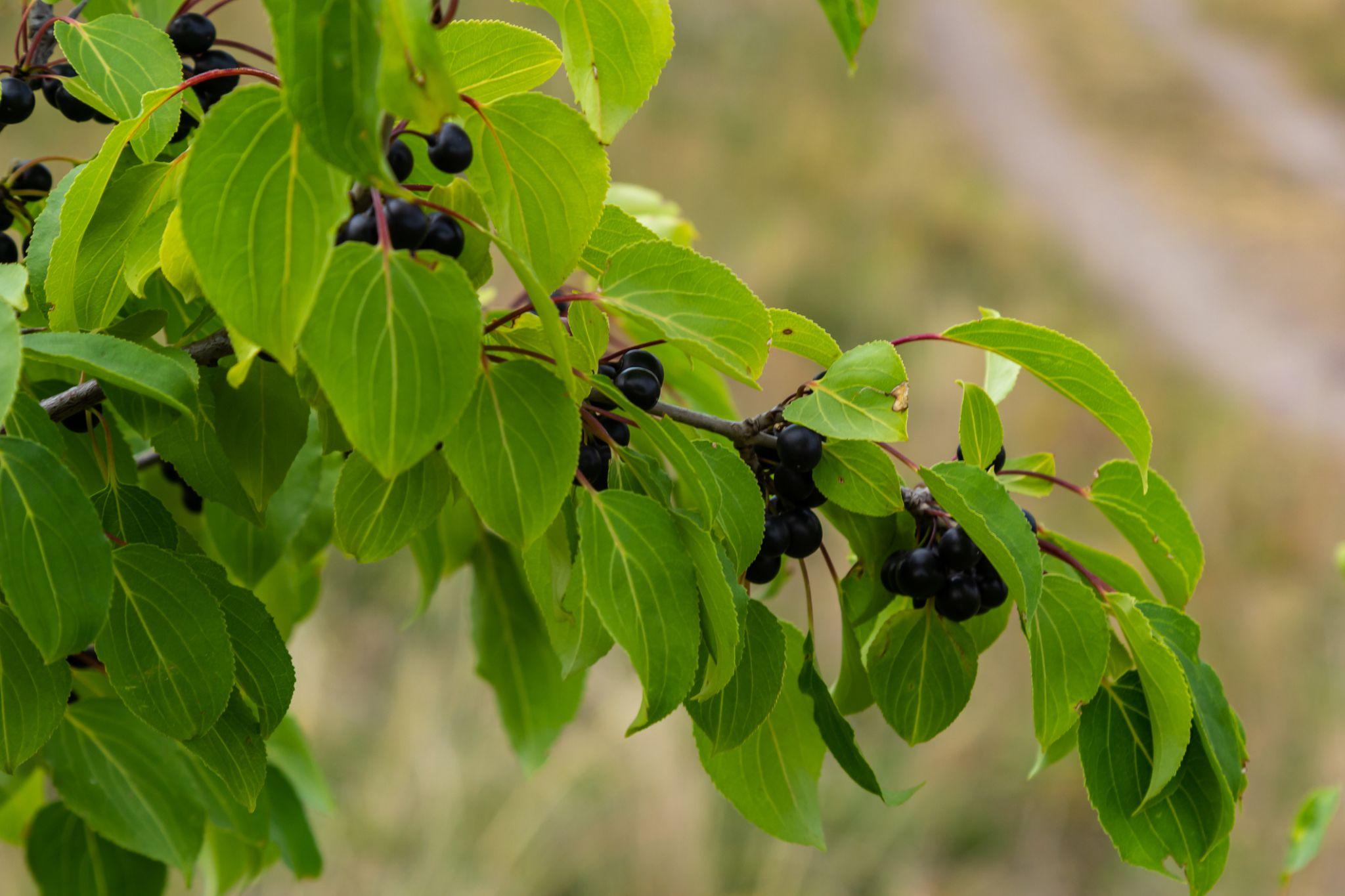
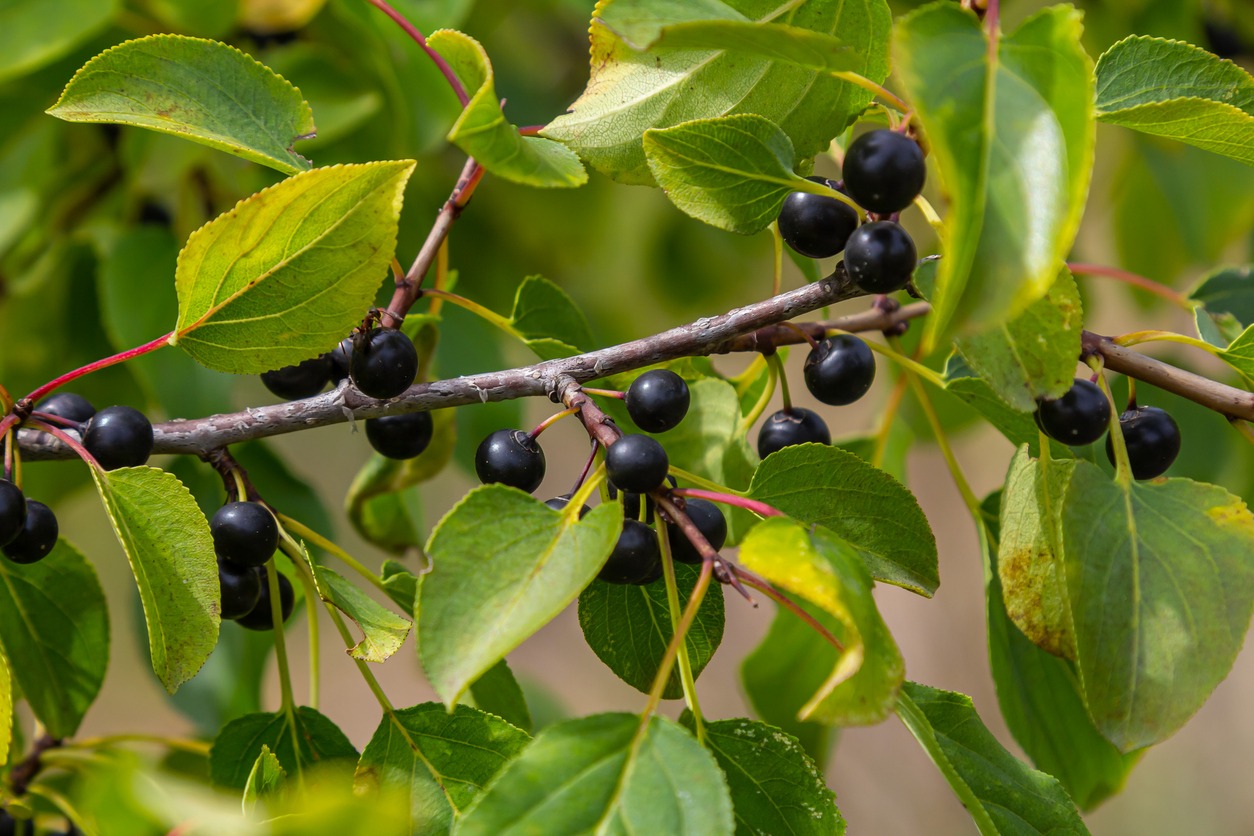
Opposite leaves with finely toothed margins and distinctive curved veins that arc toward the leaf tip; grey-brown bark with a rough, almost scratchy texture; small thorns at the branch tips; clusters of dark purple-black berries along the stems in late summer and fall. The most reliable field test is the scratch test: drag a fingernail across the outer bark to expose the inner layer.
Common buckthorn in Wisconsin reveals a bright orange-yellow inner wood that is unmistakable once you have seen it. If the inner layer is orange, you are looking at buckthorn.
Glossy Buckthorn (Frangula Alnus):
It is a separate species with no thorns, shinier and more oval leaves with smooth margins, and lighter bark with distinctive white dots (lenticels). It is more common in wet areas and stream corridors; homeowners near wetland edges or low areas in New Richmond, River Falls, or the St. Croix bottomlands should check for both species.
Common misidentifications in the St. Croix River Valley: native elderberry (Sambucus canadensis) is often mistaken for buckthorn in residential settings. The key difference is that elderberry has compound leaves, multiple leaflets on a central stalk, while buckthorn has simple, single leaves. Native chokecherry is also occasionally mistaken for buckthorn; chokecherry has smooth bark, alternate leaves (not opposite), and white flower clusters in spring.
When in doubt, the scratch test is your fastest confirmation. Consult the UW-Madison Extension buckthorn identification guide for detailed photo references before treating any plants you are not certain about.
Why Cutting Buckthorn Without a Plan Makes It Worse
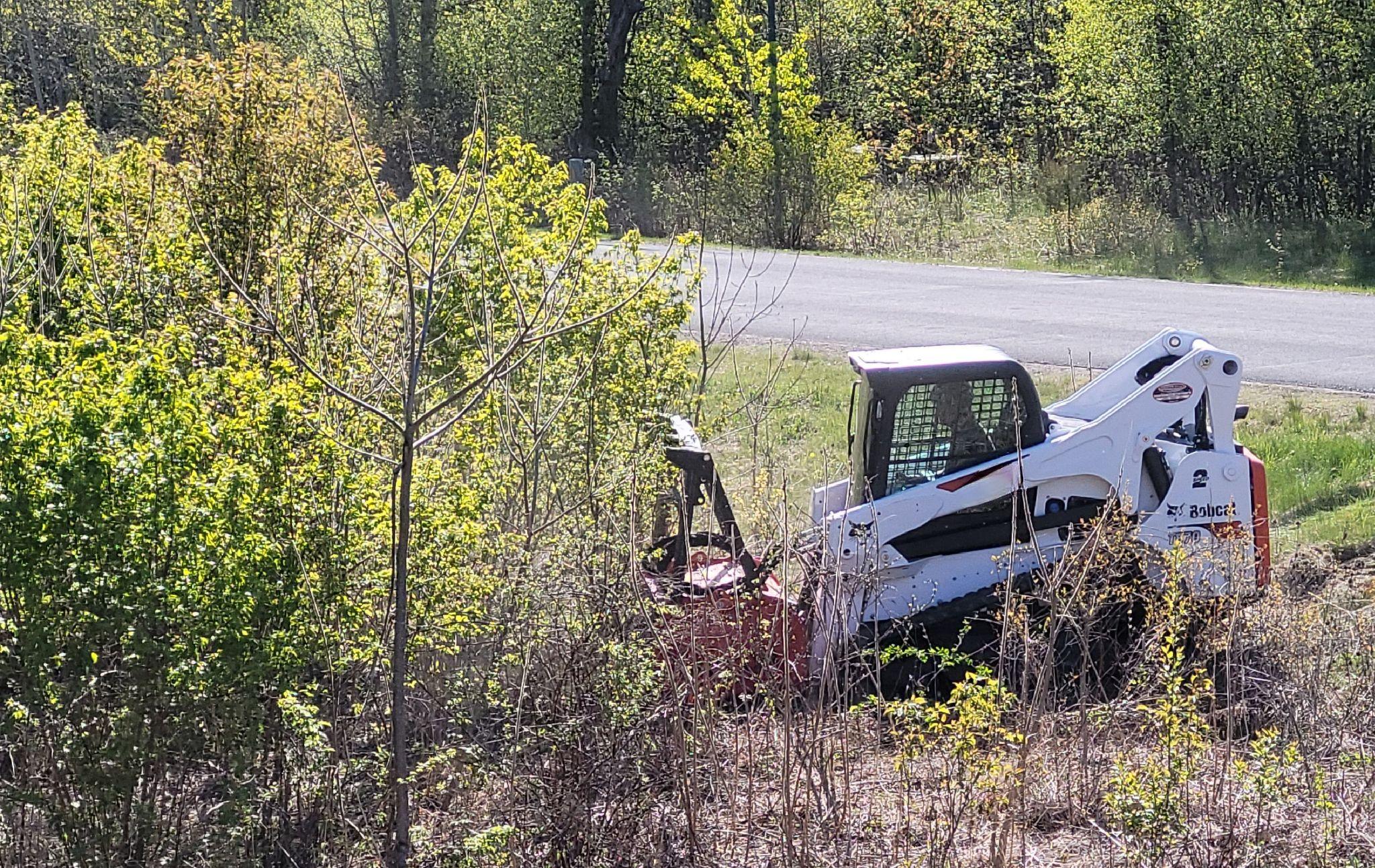
If you have already cut buckthorn back and watched it return with more stems than it had before, you are not alone and you have not failed. You have just encountered the main reason that understanding how to get rid of buckthorn correctly matters before you start.
Buckthorn cut to the ground without chemical treatment will resprout from the root collar, often producing three to five stems for every one that was cut. Within a single growing season, a plant you thought you had removed is denser and more vigorous than it was before you touched it. This is the most common and most discouraging outcome from untreated mechanical removal.
The correct approach is cut-stump herbicide treatment. Cut the stem as low to the ground as possible (within an inch of the soil surface) and apply a concentrated triclopyr-based herbicide directly to the cut surface within five minutes of cutting. The timing window is critical. As the cut surface begins to dry, the plant’s vascular uptake slows and herbicide penetration drops significantly. Apply immediately.
This method works well for stems up to about two inches in diameter. It is manageable as a DIY approach for small infestations in accessible areas, and it is the method most homeowners with a limited number of plants along a fence line or garden edge should use.
For dense thickets where cutting every stem is not practical, basal bark treatment is an alternative. A triclopyr-oil mixture is applied directly to the lower 12–18 inches of bark, no cutting required. This method is most effective during late fall and winter when native plants are dormant and the risk of contact with desirable vegetation is minimised.
For seedlings and small plants under three feet tall, a targeted foliar spray is appropriate and effective. In established residential settings with desirable plants nearby, foliar applications should be done carefully to avoid drift.
Buckthorn treatment timing in Wisconsin offers a seasonal advantage worth using: late fall is the optimal window because buckthorn holds its leaves after native plants have dropped theirs. In November, a Hudson homeowner can walk their property and identify every remaining buckthorn by the simple fact that it is still green. Native plants are dormant; buckthorn is not. This makes late-fall treatment both easier to target accurately and less risky for surrounding vegetation.
For chemical application guidance specific to your situation, the UW-Madison Extension invasive species resources provide detailed protocols for each treatment method.
Large-Scale Buckthorn Removal — When the DIY Approach Stops Working
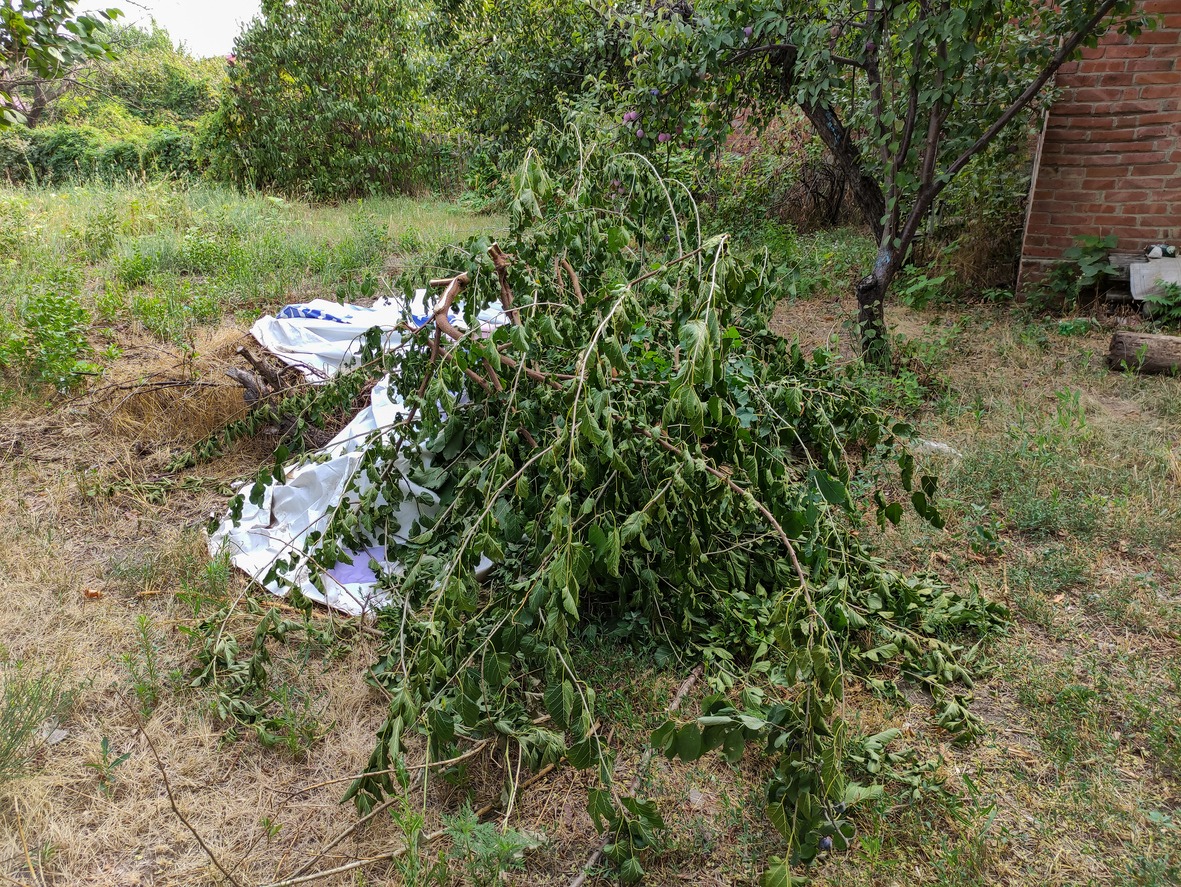
Cut-stump treatment is a realistic DIY option for a manageable number of plants in accessible terrain. But there are situations where the scale, the site conditions, or the complexity of the project clearly call for professional help.
Removing buckthorn from a wooded area is a fundamentally different job than treating a fence line, particularly the multi-stem colonies 15 to 20 feet tall that are common on the wooded bluff properties in south Hudson, Afton, and along the Stillwater ridge. Trees of this size require chainsaw work, physical removal of large woody debris, and careful herbicide application at a scale that most homeowners are not equipped to manage. Steep bluff terrain, which characterizes many of the most heavily infested properties in the St. Croix corridor, adds a safety dimension to the work that should not be underestimated.
Other situations where professional buckthorn removal makes clear sense: properties where buckthorn has grown into the native tree canopy and requires careful selective cutting to avoid damaging desirable trees; sites where restoration planting is part of the project scope and requires a coordinated plan; and heavily infested properties where a phased multi-season approach will produce better long-term results. Removing everything in one pass and walking away typically leads to re-invasion from the soil seed bank within two growing seasons. A phased approach allows crews to address re-sprouts as they emerge in subsequent years.
St. Croix County’s invasive species program provides resources for large-scale management, and Willow River Company’s removal and restoration service covers the full scope: site assessment, phased removal planning, stump grinding where appropriate, and coordination with native restoration planting to prevent re-invasion. Our tree treatments and restoration services provides the full service offering, and stump removal services are available as part of a complete buckthorn removal project. Find more detail on our approach in the tree service in Hudson, WI guide.
If you are dealing with a significant buckthorn infestation on a wooded lot, steep bluff property, or larger residential site in Hudson, Stillwater, or the surrounding St. Croix River Valley, Willow River Company’s team can assess the site, plan the removal, and help you restore the area with native plantings. Request your assessment online.
What to Plant After Buckthorn Removal in the St. Croix River Valley
Buckthorn removal creates an obligation as much as an opportunity. The bare, light-flooded ground left after removal is exactly the germination environment that buckthorn seeds, which can remain viable in the soil for up to six years, need to re-establish. Without competitive plantings going in quickly, the same area will be re-invaded within two to three growing seasons.
Native shrubs suited to the St. Croix River Valley that establish quickly and compete effectively with buckthorn re-invasion include native elderberry (Sambucus canadensis), pagoda dogwood (Cornus alternifolia), serviceberry (Amelanchier species), nannyberry (Viburnum lentago), and hazelnut (Corylus americana). These species are native to the Upper Midwest, appropriate for the regional climate, and provide habitat value that buckthorn never did.
For shaded woodland understory sites, native ferns (ostrich fern, lady fern) and woodland ground covers (wild ginger, native sedges) help suppress re-germination by closing the soil surface quickly. Ground cover is not optional on a restoration site; bare soil is an invitation.
Willow River Company’s on-site nursery at 850 Kelly Road is a genuine advantage for homeowners undertaking a restoration project. Rather than sourcing native plant material from multiple suppliers, clients working with Willow River Company on a removal and restoration project can access appropriate native species in one place, with guidance on spacing and species selection for the specific site conditions.
For a broader guide to native planting in the St. Croix River Valley climate, see our post on landscaping with native plants in Wisconsin and our guide on sustainable landscaping ideas for the St. Croix River Valley.
Frequently Asked Questions About Buckthorn Removal
Is buckthorn illegal in Wisconsin?
Both species are classified as regulated invasive species under Wisconsin Administrative Rule NR 40. This means they cannot be intentionally introduced or spread, and the Wisconsin DNR strongly encourages removal on private land. They are not subject to a mandatory removal order for most residential properties, but managing them is both ecologically important and, in some cases, required by local ordinance or easement conditions near protected natural areas. Glossy buckthorn is subject to stricter transport restrictions under NR 40.
Will buckthorn come back after removal?
It will if the stump is not treated with herbicide immediately after cutting. Untreated cut stumps resprout vigorously, often producing more stems than the original plant. The cut-stump method, with triclopyr applied within five minutes of cutting, prevents resprouting in the treated stem. Seeds already present in the soil may germinate in subsequent growing seasons, which is why follow-up treatment and competitive replanting are both part of an effective removal program.
Can I burn buckthorn brush in Wisconsin?
Wisconsin has specific open burning regulations that vary by county and season. In St. Croix County, burning brush may require a permit and is subject to restrictions during dry conditions. Check with your local municipality and the Wisconsin DNR before burning. Chipping is generally a more practical option for residential properties. It eliminates the permitting question and produces mulch that can be used on-site.
How much does professional buckthorn removal cost?
The cost varies significantly based on infestation density, site access, property size, and whether stump grinding or restoration planting is part of the scope. There is no useful published per-acre range because site conditions vary too much. Willow River Company provides on-site assessments and written proposals, contact us for a quote specific to your property.
Buckthorn doesn’t stop spreading on its own, but the right removal approach combined with the right replanting strategy can reclaim your landscape for good. Willow River Company has been managing invasive species removal and woodland restoration across the St. Croix River Valley since 1987. Schedule your consultation today.
Summary
Buckthorn removal across the St. Croix River Valley requires more than cutting; untreated stumps resprout with multiple stems, making the problem worse. Invasive buckthorn spreads aggressively through bird-dispersed seed and outcompetes native vegetation in both sun and shade. The correct buckthorn treatment combines cut-stump herbicide application, phased removal on larger sites, and native replanting to prevent re-invasion.
Tags: